You’re getting ready to list. The roof is somewhere between fine and unknown, and you’re hoping it doesn’t come up.
Key idea
It’s going to come up. The question is whether it comes up on your schedule with photos in your hand, or on day nine of a thirty day contract when the buyer’s agent is asking for a credit.
Should I replace the roof before I sell?
Most sellers who ask us that don’t need to.
The roof gets replaced preemptively because somebody looked at it, said it was old, and a five figure number felt safer than a conversation. Then it turns out the roof had eight years left and the money came out of the proceeds for nothing.
Find out what you have before you spend anything. Age doesn’t decide it, condition does, and condition means how widespread the wear is, whether the decking is sound, and how many repairs it’s already had. See do I need a repair or a full replacement.
If it does need replacing, you’ll know that too, and you’ll be deciding with a number instead of a feeling.
What happens if the buyer’s inspector finds something?
You lose the leverage you had before you listed.
Before the contract, a roof issue is a repair you schedule and pay retail for. After the contract, it’s a negotiation where the other side has an inspection report, a financing timeline, and the option to walk. Buyers rarely ask for the repair. They ask for a credit sized to a replacement, because that’s the number that protects them.
Sellers on the shore get hit harder on this than sellers inland. A lot of your buyers live somewhere else, they know coastal roofs take a beating, and they’re pricing in a risk they can’t evaluate from a weekend visit.
Does a home inspector even get on the roof?
Often not. Plenty of inspectors work from a ladder at the eave, from the ground with binoculars, or from a drone, and most of them aren’t roofers.
That sounds like it helps you. It doesn’t, and this is the thing sellers get wrong.
An inspector who can’t fully evaluate a roof writes the sentence that protects him. Something close to: the roof appears to be approaching the end of its service life, recommend evaluation by a licensed roofing contractor.
That one line does more damage to a deal than a specific defect would. It’s unbounded. The buyer reads it as maybe twenty thousand dollars, their agent reads it the same way, and neither of them has any reason to guess low.
Key idea
A photographed roof with a written report answers that line before it gets written. A specific, priced, documented condition is something a buyer can put in a spreadsheet. Uncertainty is what they overprice.
How old is too old when I’m selling?
There isn’t a hard number, and a roof with documented condition sells at almost any age.
Where age starts to bite is outside the negotiation. Some insurance carriers get particular about writing new policies on older roofs, and some loan products want remaining service life noted at appraisal. Both of those vary by carrier, by product and by year, so treat it as something your buyer may run into rather than a rule.
What you can control is whether the age comes with evidence. A 22 year old roof with a current inspection, photos and a repair history is a known quantity. A 22 year old roof with nothing behind it is a question mark, and question marks get discounted.
What about the black streaks before listing photos?
Handle those, and handle them before the photographer comes.
Streaks are cosmetic and they read as neglect to every buyer pulling into the driveway. Listing photos are where most buyers see the house first, and a streaked roof in the hero shot sets the tone for everything after it.
Soft washing is cheap next to what a first impression costs you at the table. Don’t pressure wash it, which strips the granules and creates a real problem in place of a cosmetic one. See black streaks and what they mean.
Same logic on gutters pulling away from the fascia or sagging on one run. Small, visible, and it colors how a buyer reads the whole building.
What should I hand the buyer?
A folder, and it does more work than anything you’ll say.
The roof folder
The inspection report and the photo set, dated.
Invoices for any repairs, with what was done.
The age of the roof and the shingle product if you know it, plus any warranty paperwork.
Anything the previous owner gave you.
Handing that over at listing, or attaching it to the disclosure package, changes the frame before an inspector ever shows up. The roof stops being unknown, and unknown is the expensive part of this.
For an out-of-area buyer looking at a coastal property they’ve walked through twice, that folder is most of what makes them comfortable.
Do I have to disclose a past roof leak?
Maryland and Delaware handle seller disclosure differently, and the forms and obligations aren’t the same in both states. Ask your agent or your attorney, because it’s their answer to give and not ours.
From the roofing side, a repaired problem with an invoice and photos reads differently than a problem a buyer discovers. Documentation is why those two situations aren’t the same conversation.
I’m the listing agent. What should I be telling my seller?
Get the roof documented before you shoot photos and before it goes active.
The pattern you already know: inspection comes back with a vague roof note, buyer asks for a replacement credit, seller has no counter-evidence, and you lose a week of the contract renegotiating something that turned out to be a pipe boot.
A pre-listing inspection gives you a number if there’s work needed, photos if there isn’t, and a seller who isn’t making decisions against a deadline.
It’s $199 and about 60 to 90 minutes. On listings in Ocean Pines and the downtown Ocean City blocks where the housing stock runs older, we’d do it on every one.
Get the roof documented before the photographer comes
A number if there’s work needed, 30 to 40 photos if there isn’t, and a seller who isn’t negotiating against a deadline.
Or call 410-861-6767. A person answers, 7 days a week.
When in the timeline should this happen?
Before photos.
That’s the deadline that matters, since the cosmetic work needs to be done before the house is shot, and the reporting takes a few days.
Practical order: book the inspection, get the report and photos, handle small repairs and any soft washing, then shoot the house, then list with the documentation ready.
If you’re already under contract and the inspection came back with a vague roof note, it’s not too late to get a real evaluation. A documented answer beats a guess even at that stage, and it’s the only thing that gets a credit request back down to the size of the actual problem.
What it costs
$199.
The Gutter Cleaning and Roof Tune-Up is full gutter cleaning, a complete roof inspection, a complete attic inspection where there’s access, small repairs handled on the spot when it makes sense, and 30 to 40 photos of the roof, the gutters and anything documented.
Up to five shingle tabs and small sealing work are included, so a lot of what would show up in an inspection report gets handled during the visit rather than becoming a line item you negotiate later.
Against a replacement in the 10 to 20 thousand range, or a credit sized like one, it’s the cheapest hour in the whole transaction.
A person answers when you call. They’ll ask what’s going on, get you scheduled around your photo date, and the visit runs about 60 to 90 minutes. Anything bigger than a small repair, you get an estimate and you decide. Nothing past the $199 unless you say so.
18 years doing this. 2,400+ Google reviews across all our locations, 4.8 stars.
We cover Ocean City, Ocean Pines, West Ocean City, Berlin and Bishopville, and up the Delaware side through Fenwick Island, Bethany, Dewey, Rehoboth and Lewes.
Book the $199 Gutter Cleaning and Roof Tune-Up in Ocean City
Full gutter cleaning, complete roof and attic inspection, small repairs on the spot, and 30 to 40 photos scheduled around your photo date.
More on how coastal exposure changes what a roof needs: Roofs on the Shore
Frequently Asked Questions
Should I replace my roof before selling?
Most sellers don’t need to. Find out the condition first, since age alone doesn’t determine whether a roof needs replacing, and a documented roof sells at almost any age.
Is a pre-listing roof inspection worth doing?
It prevents the situation where a vague line in the buyer’s inspection report turns into a replacement-sized credit request. Documentation is what keeps the negotiation sized to the actual problem.
Do home inspectors go on the roof?
Many don’t. They work from a ladder, from the ground, or with a drone, and most aren’t roofers, so reports often recommend further evaluation rather than stating a condition.
How old is too old for a roof when selling a house?
There’s no fixed cutoff. Some insurance carriers and some loan products pay attention to roof age or remaining service life, and that varies, so treat it as something a buyer may encounter.
Should I clean black streaks off the roof before listing?
Yes, before listing photos are taken. Streaks are cosmetic but they read as neglect in a hero shot. Use soft washing, not a pressure washer.
What roof paperwork should I give a buyer?
A dated inspection report and photo set, repair invoices, the roof’s age and shingle product if known, and any warranty documents.
https://www.aroconllc.com/wp-content/uploads/2026/09/pre-listing-roof-check-selling-shore-home.jpg10661600Francohttps://www.aroconllc.com/wp-content/uploads/2024/09/arocon-logo.webpFranco2026-09-15 04:57:572026-09-15 04:57:57The Pre-Listing Roof Check: Selling a Shore Home Without a Roof Surprise
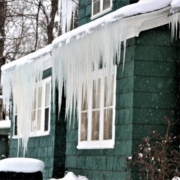
Cold snap comes through in January. Two days later there’s water coming down a wall in a house that never leaked before, and the roof looks fine from the driveway.
That’s an ice dam, and beach houses get them. Not the way Vermont gets them, but they get them, and the version we get out here has its own cause.
Key idea
The bigger problem is what happens next. Most of the ice dam damage we find in April didn’t come from the ice. It came from somebody trying to get the ice off.
Do beach houses even get ice dams?
Yes, less often than inland, and they behave differently.
A classic ice dam needs sustained snow cover and heat escaping into the attic, which melts the snow from underneath. The water runs down, hits the cold overhang past the exterior wall, and refreezes into a ridge. Then everything melting behind that ridge has nowhere to go, so it backs up and looks for a way in.
Out here you don’t get weeks of snowpack. You get freezing rain, a hard freeze behind a wet nor’easter, one snow that half melts and then locks up overnight. Different ingredients, same result at the eave.
What causes an ice dam on a shore house?
Usually the gutter, which is why this is the one winter problem you have real control over.
A gutter packed with pine needles doesn’t drain. Water sits in it. Temperature drops, that water freezes into a solid block along the whole run, and now the bottom edge of your roof has a wall of ice sitting on it. Everything coming down the slope stops there.
Under the canopy in Ocean Pines, Berlin or West Ocean City, gutters fill with needles by November whether or not you were there to see it. That’s the setup.
The other half is heat getting into the attic. Older frame cottages downtown, anything with a converted attic space, anything with insulation that got wet years ago and packed flat, all of that leaks warmth into the roof deck and starts the melt. See mold in the attic and what it usually means.
Low slope makes both worse. Water moves slower on a shallow pitch, so it has more time to freeze.
Does where my house sits change the risk?
It changes it a lot, and the highest-risk houses out here aren’t the ones on the water.
Under the canopy. Ocean Pines, Caine Woods, Berlin, Bishopville, West Ocean City. This is where ice dams actually happen on the shore. Needles pack the gutters by November, shade keeps the roof from ever drying or clearing, and what freezes up there stays frozen for the length of the cold snap. Ocean Pines adds a second problem, since a lot of that housing went up starting in 1968 and plenty of those attics are still working with original insulation and marginal ventilation. Packed gutters plus a warm attic is the whole recipe.
Oceanfront and oceanside. North Ocean City, the blocks near the boards, Fenwick Island. Wind works in your favor here, since it scours snow off the roof before it can sit and melt from below. What you get instead is freezing spray and wind-driven rain icing up at the eave, on fasteners and flashing that salt air has already been working on all year.
Downtown, below 33rd Street. Older frame cottages, converted attic space, knee walls and dormers. Dormers and valleys are where meltwater collects and refreezes, and a finished attic room means heat is going straight into the deck above it.
Bayside and canal lots. Heron Harbour, Sunset Island, Mallard Island. Less wind than the oceanfront, so snow sits. Low slope is common, and water moves slower on a shallow pitch, so it has more time to freeze before it reaches the gutter.
Montego Bay and the low-slope stretches at the north end. Little to no attic space means the ceiling sits right under the deck, so heat transfers directly and there’s no cold buffer between the two.
One more thing that surprises people. The sunny slope can build a worse dam than the shaded one. A north face that stays frozen all week doesn’t move any water. A south or west face melts every afternoon and refreezes every night, and that daily cycle is what stacks ice at the eave.
Why did water come through the ceiling during a cold snap?
Because backed-up water sat on the roof long enough to find a seam.
A roof sheds water that runs down it. It isn’t built to hold standing water against the shingle courses, and that’s what an ice dam creates. Water works backward under the tabs, through a nail hole, past flashing that was fine under normal conditions.
Then it shows up somewhere that makes no sense. Down a wall, around a window, in a room on the other side of the house from the ice. Water travels along framing before it comes through drywall, so where you see it isn’t where it got in.
Can I knock the ice off myself?
You can. This is where most of the damage happens, and almost none of it is visible until spring.
Cold asphalt shingles are brittle. Warm shingles flex, cold ones crack, and below about 40 degrees they’ve lost most of their give. So everything you do up there in January does more harm than the same action in June.
What we find in the spring:
Chopped shingles. Hammer, hatchet, ice pick, garden spade. The ice doesn’t separate cleanly from the roof, it separates with granules and pieces of shingle mat still frozen to it. You get punctures and split tabs under where the ice was.
Torn tabs at the eave. Ice grips the shingle surface. Lever a chunk off and it takes the tab edge with it, or breaks the seal strip so the tab is loose and free to lift in the next wind.
Gutters pulled off the house. A gutter full of ice is already carrying more weight than it was built for. Chop at it, or lean a ladder on it, and the fasteners let go of the fascia. Now the gutter’s hanging and the fascia’s open, and it stays that way until somebody looks in April.
Footfall cracks. Walking a frozen roof cracks shingles under your weight in a pattern nobody notices until it leaks.
Falling ice. The chunk you free up lands on a deck rail, a window, an HVAC unit, a car, or a person standing below.
Ladder falls. Ladder, ice, cold hands, frozen ground. This is the one that puts people in the hospital and it happens every winter.
Then April comes and the roof leaks. Whoever diagnoses it a season later sees split shingles at the eave and calls it winter damage, because a hatchet mark and a storm look the same once the ice is gone. That’s how a fixable roof turns into a replacement quote.
Same goes for the guy your property manager sent over with a hammer while you were in Baltimore. He was trying to help.
What about rock salt or ice melt on the roof?
Skip it.
Rock salt and calcium chloride corrode metal. On a roof that means your flashing, your drip edge, the fasteners holding everything down, and the gutter itself. Out here those parts are already fighting salt air year round, so you’re adding to a problem the coast started. See does salt air wear a roof out faster.
It also runs off into whatever’s planted below, and it can stain siding on the way down.
The one version pros sometimes use is calcium chloride in a fabric sleeve laid across the dam so it melts a channel without scattering. It works. It also means getting to the eave, which puts you back on a ladder in winter.
What about hot water or a heat gun?
Hot water refreezes.
You melt a channel, the water runs down onto a colder section, and by morning you’ve built a second dam lower on the roof than the first one. You also drove a volume of water under the shingle courses to do it.
Heat guns and torches near a roof edge sit next to dry framing, dry decking, and whatever’s in the soffit. People have burned houses down doing this.
Steam is the correct tool, low pressure steam run by somebody who does ice removal, which melts the ice without touching the shingles. If you’re going to pay somebody, pay for that and not for chipping.
Should I use a roof rake?
A plastic one, from the ground, on the lower few feet, pulling rather than scraping. That’s the safe version and it does help.
The failure modes: metal blades scrape granules off, a rake caught under a tab tears it, and anything above the first few feet means a ladder. If you can’t reach it standing on the ground, you’re done.
If it’s below freezing and the shingles are brittle, gentle still cracks things. On a cold roof the least damaging option is often to manage the water inside and deal with the roof once it warms up.
Why does the damage show up in April instead of January?
Because most of it doesn’t leak while it’s frozen.
Ice is a seal. A split tab or a punctured shingle under a block of ice isn’t going to run water until the ice is gone. Then the first warm rain finds the opening, and by then nobody connects it to the cold snap three months back.
On a house you live in you might notice a stain in February. On a house that sits closed until April, the first person to see anything is you, standing in a hallway wondering how long that’s been happening. See why second home leaks go unnoticed for years.
What prevents them?
One of them you can knock out this fall.
Clear gutters going into winter. No standing water in the trough means no block of ice on the eave. On a needle-heavy lot this is the whole ballgame, and it’s why the fall visit matters more than the spring one. See why gutters overflow every storm.
A cold attic. Ventilation working, insulation intact and not compressed, gaps around lights and fans sealed so warm air isn’t rising into the roof deck. A roof that stays the same temperature as the air outside doesn’t melt snow from below.
Heated cables at the eave get sold as a fix. They melt a channel, they don’t stop the dam, they cost money to run, and they’re a maintenance item of their own. Fine as a last resort on a problem eave that’s already been looked at. Not a first step.
Book the fall visit before the first freeze
The $199 tune-up does both prevention steps in one trip: gutters cleared so the eave can drain, and an attic check for warm air getting into the roof deck.
Or call 410-861-6767. A person answers, 7 days a week.
My place sits empty all winter. Does this apply to me?
Differently, and part of it works in your favor.
Heat off means a cold attic, so you’re less likely to get the classic melt-from-below dam than a neighbor who’s home all winter with the thermostat up.
What you still get is the gutter version. Needles, standing water, freeze, ice on the eave. That happens whether anybody’s home or not.
If the heat is on low to keep pipes from freezing and the insulation is poor, you get the melt anyway. Nobody’s there to see water come through a wall either, so it runs the rest of the winter and you find it in April.
The Gutter Cleaning and Roof Tune-Up is full gutter cleaning, a complete roof inspection, a complete attic inspection where there’s access, small repairs handled on the spot when it makes sense, and 30 to 40 photos of the roof, the gutters and anything documented.
For ice dams specifically, that visit does both prevention steps at once. Gutters come out so the eave can drain, and somebody’s in your attic looking at whether warm air is getting up there in the first place.
Book it in the fall. October and November, before the first freeze, on a house that’s about to sit empty for five months.
A person answers when you call. They’ll ask what’s going on, get you scheduled for a day that works, and the visit runs about 60 to 90 minutes. Anything bigger than a small repair, you get an estimate and you decide. Nothing past the $199 unless you say so.
18 years doing this. 2,400+ Google reviews across all our locations, 4.8 stars.
We cover Ocean City, Ocean Pines, West Ocean City, Berlin and Bishopville, and up the Delaware side through Fenwick Island, Bethany, Dewey, Rehoboth and Lewes.
Book the $199 Gutter Cleaning and Roof Tune-Up in Ocean City
Full gutter cleaning, complete roof and attic inspection, small repairs on the spot, and 30 to 40 photos. October and November, before the first freeze.
Or call 410-861-6767. A person answers, 7 days a week.
Keep reading
Ice is one of a handful of things the coast does to a roof that inland houses handle differently. The rest is here: Roofs on the Shore
Frequently Asked Questions
Which houses get ice dams worst on the shore?
Properties under pine canopy inland, meaning Ocean Pines, Caine Woods, Berlin and West Ocean City. Needle-packed gutters, shade that keeps ice from clearing, and older attics with marginal ventilation. Oceanfront houses get less snowpack because wind scours the roof.
Do beach houses get ice dams?
Yes, less often than inland and from different causes. Instead of weeks of snowpack, the shore gets freezing rain and hard freezes behind wet storms, and clogged gutters that freeze solid along the eave.
What damage does chipping ice off a roof cause?
Split and punctured shingles, torn tabs at the eave, broken seal strips, granule loss, and gutters pulled off the fascia. Cold shingles are brittle, so damage happens easily and usually doesn’t leak until spring.
Can I put rock salt or ice melt on my roof?
It corrodes flashing, drip edge, fasteners and gutters, and runs off into landscaping. Coastal roofs are already exposed to salt year round.
Does hot water get rid of an ice dam?
No. It refreezes lower on the roof and builds a second dam, and it drives water under the shingle courses in the process.
Is a roof rake safe?
A plastic rake used from the ground on the lower few feet, pulling rather than scraping, is the safe version. Metal blades strip granules, and anything requiring a ladder in winter puts you on ice for a cosmetic gain.
How do I stop ice dams from forming?
Clear gutters before winter so there’s no standing water to freeze at the eave, and keep the attic cold with working ventilation, intact insulation and sealed air gaps.
Do heat cables fix ice dams?
They melt a channel rather than removing the cause, they cost money to run, and they need their own upkeep. Reasonable as a last resort on a problem eave, not as a first move.
https://www.aroconllc.com/wp-content/uploads/2026/09/ice-dams-beach-house-winter-leaks-ocean-city.jpg10671600Francohttps://www.aroconllc.com/wp-content/uploads/2024/09/arocon-logo.webpFranco2026-09-15 04:57:512026-09-15 04:57:51Ice Dams on the Shore: Why Beach Homes Get Winter Leaks
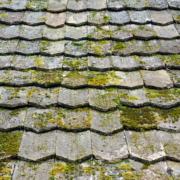
You’ve been living with those streaks for who knows how long.
Dark stripes running down the roof, worst on one side, looks like somebody dumped dirty water up there. Every time you pull in the driveway you see it and think, yeah, I gotta deal with that at some point.
Okay. Good news first. It’s not dirt. And it’s not eating your roof.
It’s algae. It’s alive, it’s growing on your shingles, and it’s there because that side of your roof stays damp. Which out here, near the water, describes just about everybody.
Key idea
The algae is a sign. It grew there because that slope holds moisture, and moisture is what causes the stuff you can’t see from the driveway. Those streaks are just the part that’s visible.
So don’t panic, nobody’s roof is falling in because it’s got streaks on it. But don’t ignore the message either, right? Your roof just told you something about itself that’s worth finding out what.
What are the black streaks on my roof?
Gloeocapsa magma. That’s the name. Now you never have to think about it again.
It’s a blue-green algae, a cyanobacteria technically, and it travels through the air. Lands on your roof, conditions are right, it sets up shop and multiplies. The black you’re looking at is a dark coating the stuff makes to protect itself from UV. That’s why it shows up hard on a light roof and you can barely see it on a dark one.
What’s it eating? The limestone filler in your shingles. Not the asphalt, or the mat. The powdered limestone they mix in as filler. That’s why it’s on your roof and not on your siding.
And it runs downward because rain carries it down the slope. That’s the tell right there. Streaks running down, wider at the bottom, following the water.
Is the algae itself hurting my roof?
Barely. And look, I could tell you it’s destroying your roof and you’d probably book something today. I’d rather you trust me later.
Two real effects. It holds moisture, so a living colony on your shingles keeps them damp longer after rain than a clean roof would. And it darkens the roof, so the roof takes on more heat, which in August at the beach is a small hit to your attic.
That’s it. That’s the whole damage story for the algae itself. It doesn’t eat through shingles. It wont cause leaks. It does not turn a 25 year roof into a 12 year roof on its own.
So if somebody’s telling you the streaks are destroying your roof, they’re either wrong or they’re working you.
Now read that first effect again. It holds moisture. And why is it there in the first place? Because there was already moisture. Which is the whole reason we keep going here.
So what are the streaks telling me?
The slope they’re on stays wet.
Algae grows where water sits. And a roof that stays wet? That’s where things go wrong overtime, in spots you can’t see standing in your yard.
That’s what’s worth caring about here. Those streaks are free information. Your roof is pointing right at the slope that isn’t drying out, and everything expensive that ever happens to a roof starts with water that stayed somewhere too long.
What kind of hidden problems does moisture cause?
Here’s where it stops being cosmetic. And here’s why somebody’s gotta actually get up there, because almost none of this is visible from the ground.
Decking going soft. Under your shingles is plywood, and that’s what every nail on your roof is driven into. Damp gets into that wood, it goes spongy. And guess what? You can’t repair rotten decking. There’s nothing left to fasten to.
Nails corroding. Thousands of nails hold your roof down. Wet salty air out here works on every single one. Nails that lose their grip are how shingles come off in a wind that never should’ve taken them.
Moss moving in. Stay damp long enough and flat algae gives way to moss, which stands up, holds real water, and lifts the shingle edges. A lifted shingle is a wind problem sitting there waiting on a nor’easter.
The bottom edge sitting in water. If your gutters have been jacked up, that lowest couple feet of roof has been standing in water for months. On a shore house that’s exactly where rot starts. See why gutters overflow every storm.
Attic moisture and ventilation. Sometimes the roof won’t dry because the attic under it isn’t breathing. That shows up as staining on the underside of the plywood, insulation matted flat, and eventually mold. See mold in the attic and what it usually means.
Insulation that quit. Wet insulation doesn’t insulate. You’re paying for that every month and you’d never connect it to your roof.
Every one of those gets found the same way. Somebody gets on the roof. Somebody gets in the attic. And it’s somebody who’s seen a few thousand of these and knows what a soft spot feels like under his boot and what a stain on decking means.
None of it’s visible from the driveway.
Why is it only on one side of my house?
Because algae wants what it wants and one side of your house is handing it over.
North-facing slopes, every time. Less sun, so that side stays damp longer after every rain and every morning fog. It means one slope dries slow.
Same deal under a tree line or along the low edge of the roof where water sits longest before it gets to the gutter.
The slowest-drying slope on your house is where moisture damage shows up first.
Why do shore roofs get it worse than roofs inland?
Because you live in a place built for it.
Humidity off the water all season long. Morning fog that sits up there for hours. Warm months that run long. Loblollies around West Ocean City and Berlin shading half the roofs in the neighborhood and dropping needles that hold damp right against the shingles.
The spores travel through the air and your neighbors are close. Once it’s on one roof on the block, it’s on the block. Drive around out here and you’ll see whole streets where every third house has the same streaks running down the same slope. That’s not the builder’s fault and it’s not yours.
Same shingles, same year, one house at the beach and one 60 miles inland. They will not look the same and they will not last the same. That’s the coast. Point being basic hygiene is the solution. Keep it clean, get it inspected from time to time.
Is it algae, moss, or lichen?
This matters, because the answer changes what you do about it. First, look at the texture, not the color.
Algae. Flat. Stains the surface, no height to it. Runs downward in streaks. Black or dark gray. On its own, cosmetic. This is what most people have.
Moss. Green, fuzzy, stands up off the roof. You can grab a handful. Moss is the one that’s actually a problem, because it holds real water against the shingle and it grows in under the edges and lifts them. You’ve got moss, don’t file it under cosmetic.
Lichen. Crusty circular patches, greenish gray, looks painted on. Lichen roots into the shingle mat and it does not come off easy, and cleaning it usually takes granules with it. Generally leave it be unless the roof’s near replacement anyway.
Key idea
Flat streaks running down, that’s algae, you’ve got time. Fuzzy and standing up, that’s moss, worth handling. Crusty patches, that’s lichen, and going after it aggressively does more damage than the lichen was doing.
Can I pressure wash it off?
No. And of everything on this page, this is the one I’d ask you to actually take seriously.
Your shingles are protected by granules. That layer of little ceramic-coated rocks on the surface. Granules are the sunscreen. They’re the only thing standing between the asphalt and the UV that wants to cook it. Granules come off, that shingle’s on a clock.
A pressure washer strips granules. Not maybe. Not if you do it wrong. That’s what the tool does. So somebody blasts the streaks off, the roof looks fantastic for about a week, and they just took five or eight years off it. You’ll find the granules piled up at the bottom of the downspout after. That tells you exactly what happened.
Two more things. Pressure washing drives water up under the shingle courses, which is the opposite of what a roof’s built to handle. So congratulations, you just added moisture to a slope that already had a moisture problem. And most manufacturer warranties throw out damage from pressure washing, so if you ever needed that warranty, you just spent it on how your roof looks from the street.
Somebody shows up with a pressure washer and a ladder and quotes you a roof cleaning? That’s not a roofer. Send him home.
What gets algae off, and who should be doing it?
Low pressure and a chemical solution. The industry calls it soft washing and it’s what the shingle manufacturers themselves point you to.
Roughly 50-50 water and regular chlorine bleach. Applied gently, let it sit a bit, then rinse it off with plain water at garden hose pressure. No scrubbing. No brushing. No blasting. The bleach kills the organism, the rinse carries it off. That’s the method. It works.
Now here’s where I tell you to hire somebody, and it isn’t because we’re protecting a service.
A roof with bleach solution all over it is the slickest thing you will ever stand on. Granules under wet feet are like ball bearings before you add anything to them. Now add soap. Now add a ladder set in soft spring ground against a two story. That’s the setup that fills up emergency rooms every fall, and for what? This is a cosmetic job. Nobody should get hurt over how their roof looks from the road.
Hiring it out, two questions get you most of the way. Ask them to confirm it’s soft washing and not pressure washing. And ask what they’re doing about the runoff.
On the runoff. Bleach kills landscaping, so soak your plants down first and rinse them after. And this is where being at the shore matters more than it would anywhere else. That runoff goes to the storm drains and the storm drains go to the coastal bays, and the bays are carrying plenty already. Contain what you can, rinse hard, and don’t do it right before a downpour.
Last thing, know this going in. Soft washing kills what’s up there right now. It does not stop it coming back, because the spores are still in the air and your north slope still dries slow. You’re buying a few good-looking years. You’re not buying permanent. Anybody selling permanent is selling.
Ground-level stuff you can absolutely handle yourself, and it actually helps: keep the tree limbs off the roof so that slope gets sun and air, keep the gutters flowing so the bottom edge isn’t sitting wet, and shoot a photo of the roof from the same spot every spring so you can tell whether it’s spreading or just sitting there. See what owning a place at the shore takes to maintain.
Do zinc strips work, or is that a gimmick?
They work. They’re slow, and they’re not a rescue.
Strip of zinc or copper up near the ridge. Rain hits it, runs down the slope carrying metal ions, algae doesn’t want to grow in that. Copper’s better than zinc. Either one only protects what’s below it, so a strip at the ridge does the slope and a strip halfway down does half a slope.
It’s preventive, not corrective. Keeps a clean roof clean, won’t undo streaks you already have. And it takes a season or two of rain to show you anything, so nobody puts one up and sees a result this month.
Worth it on a roof that just got cleaned or just got replaced. Not worth it as a fix for what’s already there.
And if you’re anywhere near replacement, algae-resistant shingles are real, not a gimmick either. Copper granules mixed right into the surface, warrantied against streaking for a stretch of years. Out here, where the climate’s basically an algae incubator? That’s an upgrade that pays. Bring it up when you’re at that conversation, not before. See do I need a repair or a full replacement.
My roof’s supposed to last 25 years. Why do people end up replacing them prematurely?
Because a rating and a lifespan are two different things.
3-tab asphalt, you’re generally good for something like 20 to 25 years. Architectural, call it 25 to 30, more on the premium stuff. But those numbers assume a roof that’s ventilated, drains right, dries out between rains, and gets the small stuff handled as it comes up.
Out here? Plan on the low end of whatever your shingle’s rated for. Wind, UV off the water, wind-driven rain, salt, long humid months. They all take their cut.
And the roofs that go way short of their rating almost never got taken out by one big thing. They got there on small things nobody handled. A pipe boot that dry rotted in year nine. A gutter that hasn’t moved water in three seasons. A slope that never dried out, on a house nobody was standing in.
So that’s the real math on a roof. You’re not choosing between spending money and not spending money. You’re choosing between small money on a schedule and a five figure check that shows up years before it had to. Replacement runs somewhere in the 10 to 20 thousand range once you’re there.
Look, it’s like having a good mechanic. When you’ve got a good mechanic, it’s not a catastrophe when something goes wrong with the car, right? Same thing with a roof. It’s not a catastrophe if a shingle blows off. You’re not about to get ragged over the coals. You call, a friendly tech comes out, he deals with it. That’s peace of mind, and peace of mind is most of what you’re actually buying.
An ounce of prevention is worth a pound of cure. You’ve heard it. It’s still true, and it’s more true on a house sitting in salt air.
I own a rental at the shore. What should I be doing?
Getting eyes on the roof twice a year. And it’s different for you than for somebody living in the house year round, so let’s be specific about why.
You’re not there. Nobody’s standing in the hallway when a stain shows up on a ceiling. Your cleaning crew isn’t getting on a ladder and honestly it isn’t their job. Nobody’s home during the nor’easter. And the house sits empty through exactly the months when the weather’s worst. Everything that happens to that building happens with nobody watching. See why second home leaks go unnoticed for years.
So the rhythm is spring and fall. Spring to see what winter did before guests are in the house. Fall to clear the gutters and close the gaps before the place sits by itself. Only doing one? Do the fall one.
And for an owner who lives somewhere else, the photos are the whole thing. You should never be taking anybody’s word about a roof you’ve never stood on. Start a folder, put every report and every set of pictures in it, never delete anything. That folder settles an insurance claim faster than an argument does. It answers the buyer’s inspector when you sell. And it keeps every contractor honest, us included. See what owning a place at the shore takes to maintain.
This is just hygiene, same as getting the HVAC looked at. You’ve got serious money sitting in that building. The roof’s the most expensive part of it and it’s the part nobody ever looks at.
Do I have to do anything about the streaks themselves?
Honestly? A lot of you don’t.
Flat algae, you’re not selling, you’re not renting it out, and you don’t personally hate looking at it? Then leaving those streaks alone is a completely defensible call. It’s cosmetic. It’s going to stay cosmetic. Go spend that money on something else.
When it is worth handling
You’re listing the house. Streaks read as neglect to every buyer pulling in the driveway, and to plenty of inspectors too. That’s leverage you’re handing over for free, and a soft wash before the photos is cheap next to what it costs you at the table. See the pre-listing roof check.
You rent it out. Guests judge a house from the driveway. That one’s just business.
It’s moss, not algae. Different situation, and moss should get handled.
Key idea
Keep the two decisions separate, because they’re not the same decision. Cleaning the streaks is about how your house looks. Getting eyes on the roof is about what those streaks are telling you. First one’s optional. Second one isn’t.
What if I just want somebody to look at the roof?
That’s the $199 Gutter Cleaning and Roof Tune-Up. And let me be clear about what it is and isn’t so nobody’s surprised.
It’s not a roof washing. The tune-up isn’t going to take your streaks off.
What it is: full gutter cleaning, complete roof inspection, complete attic inspection where there’s access, small repairs handled right then while we’re up there, and 30 to 40 photos so you can look at your own roof instead of taking somebody’s word for it.
Which is exactly the right thing for what this page is about. The streaks are cosmetic. What that moisture has been doing to your decking, your nails, your bottom edge and your attic is not. And that’s what somebody standing on your roof and sitting in your attic actually finds.
This happens all the time:
Somebody calls about the streaks. They say, well, the roof’s 20 years old anyway, I figured I’d just replace the whole thing and be done with it.
And I say, look, let’s start with the tune-up. $199. We get up there, we clean the gutters out, we look at everything, we take the pictures, and then you actually know what you’ve got. If you need the roof, you’ll know, and you’ll have the photos that prove why. If you don’t, guess what? You just saved yourself north of ten grand.
And if you like how we treated you on the tune-up, we’re right here when the replacement day comes.
That’s it. It’s not complicated. Give people the service, get it done, they’re stoked, it’s over, and we’re here for whatever comes next.
A person answers when you call, by the way. Not a robot, not a phone tree. They’ll ask what’s going on out there, get you on the schedule for a day that works, and our team calls ahead when they leave the last job. About 60 to 90 minutes. Then the photos come to you. Anything bigger than a small repair, you get an estimate and you decide. Nothing past the $199 unless you say so.
18 years doing this. 2,400+ Google reviews across all our locations, 4.8 stars. Go take a look at what your neighbors are saying.
Book the $199 Gutter Cleaning and Roof Tune-Up in Ocean City
Not a roof washing: a complete roof and attic inspection with the gutters cleaned, small repairs on the spot, and 30 to 40 photos of what the moisture has really been doing.
Or call 410-861-6767. A person answers, 7 days a week.
Keep reading
Algae’s one item on a longer list of things the coast does to a roof that inland houses never have to think about. The rest of it’s here: Roofs on the Shore
Frequently Asked Questions
Are black streaks on a roof dangerous?
The streaks themselves are cosmetic. What matters is what they’re telling you, which is that the slope stays damp, and moisture is what drives decking rot, corroding nails and attic problems you can’t see from the ground.
Why does algae grow on a roof at all?
It travels through the air and it feeds on the limestone filler in asphalt shingles. It takes hold where a roof dries slow, which is why shaded and north-facing slopes get it first.
Can I pressure wash algae off my roof?
Don’t. A pressure washer strips the granules that protect the shingle, forces water up under the courses, and typically voids the manufacturer warranty. Soft washing at low pressure is the right method.
What actually removes roof algae?
Roughly 50-50 water and chlorine bleach, applied gently, left to sit, then rinsed at garden hose pressure. Soak the landscaping first and rinse it after, never mix bleach with other cleaners, and hire it out rather than standing on a wet slick roof yourself.
Will the streaks come back after cleaning?
Eventually, yes. The spores are still in the air and a shaded slope still dries slow. Cleaning buys you good-looking years, not permanence. Zinc or copper strips near the ridge slow it down going forward.
How do I tell algae from moss?
Algae is flat and runs downward. Moss is green, fuzzy and stands up off the surface. Moss lifts shingle edges and holds water against them, so moss is worth handling where algae mostly isn’t.
Should I get the roof looked at if all I’ve got is streaks?
It’s worth it, especially on a rental or a second home. The streaks are cosmetic, but they’re marking the slowest-drying slope on the house, and that’s where moisture damage shows up first. A tune-up gets somebody on the roof and in the attic and puts 30 to 40 photos in your hands.
https://www.aroconllc.com/wp-content/uploads/2026/09/black-streaks-roof-algae-ocean-city.jpg10671600Francohttps://www.aroconllc.com/wp-content/uploads/2024/09/arocon-logo.webpFranco2026-09-15 04:57:462026-09-15 04:57:46Black Streaks on Your Shore Roof: It’s Algae, Not Dirt (Don’t Pressure-Wash It)
You’ve been standing in the yard holding a piece of your own roof for about five minutes.
It came off sometime in the night. The roof looks fine from down here, which is somehow less reassuring than if it looked bad.
That piece in your hand is the best evidence you’ve got. Here’s how to read it.
It blew hard Tuesday night and now there’s shingle pieces in your yard.
Everybody asks the same question. Did the storm do this, or was my roof already cooked and the storm just finished it off?
One of those answers might be a claim. The other one’s a maintenance bill. You can’t tell which from the couch, but you can get pretty close from the ground once you know what you’re looking at.
It’s leaking right now. What do I do tonight?
Inside first.
Move what’s under it, put a bucket down, and if you’ve got a bulge in the drywall, that’s water pooling above it. A small hole with a screwdriver at the low point drains it into your bucket instead of letting the ceiling come down in one piece. That feels wrong and it’s the right call.
Photograph everything before you clean any of it up. The wet ceiling, the bucket, the water, the outside of the house, the yard.
Then leave the roof alone until daylight and dry weather. Nobody should be on a wet roof in the dark, and a tarp thrown on badly does more damage than the hole it’s covering, because it traps water and the fasteners holding it down are new holes in your roof.
Call in the morning and say it’s actively leaking. That changes how you get scheduled.
What does wind damage look like on a shore roof?
Wind damage has tells, and they’re specific once somebody points ’em out.
Clean breaks. A tab ripped off in wind tears at the edges. The break looks fresh, granules are still stuck on it, the color’s still good, and the piece in your yard doesn’t crumble when you pick it up.
Creases. Wind gets under a shingle, lifts it, slaps it back down, and leaves a fold line across the tab. Looks fine from the ground. That crease is a crack in the mat and it’ll leak in a year or two with the shingle still sitting up there. Most people don’t know to look for it.
Exposed nail heads and a shiny strip. When a tab pulls off you can sometimes see the nails, plus the adhesive strip where the shingle above it was sealed down. Fresh break.
It’s bunched in one spot. Wind hits your house from a direction, so damage clusters on one slope, usually up high, usually along the edges, the rakes, the ridge. Wind gets its best grip on corners. Everything messed up on one face and the other side looking new is a wind story.
How long do I have before missing tabs turn into a leak?
Less time than the roof looks like it’s giving you, and it depends on what’s underneath.
Under your shingles is underlayment, felt or synthetic. It’s water resistant and it’s the reason a missing tab doesn’t leak the same night. It isn’t a roof, though. Felt degrades in sun and wind in a matter of weeks once it’s exposed, and it tears at the nail line. Synthetic buys longer, months rather than weeks, and still isn’t a plan.
The bigger issue is the nails. When a tab pulls off, the fasteners holding the course below it are often exposed, and a nail head sitting in the weather is a direct path into the decking. That’s how a few missing tabs turn into stained plywood over a winter.
Practical answer: a couple of tabs missing in April on a dry stretch, you’ve got time to schedule it properly. The same tabs missing in October, going into five months of nor’easters on a house nobody’s inside, get them handled before the house closes up.
What does an old roof look like when it lets go on its own?
Different picture, and it’s usually the more common one.
Everything’s the same amount of bad. Age doesn’t pick a side. Both slopes look tired. Maybe south and west look a little worse where the sun’s been beating on ’em, but there’s no hot spot.
Curling and cupping. Edges lifting all over the roof, corners turning up like an old sandwich. That’s fifteen years of sun, not one storm.
Bald patches. Granules are the sunscreen. When they wash off you get dark shiny spots where the asphalt’s cooking in the UV. You’ll find the granules piled at the bottom of your downspouts.
The piece in your yard crumbles. Pick it up. Brittle, cracks when you flex it, edges rounded and worn instead of torn clean? That shingle didn’t get taken. It quit.
Nail pops, dried caulk, a split pipe boot. Wear shows up everywhere at once because it’s all the same age.
Key idea
Wind damage shows up in one place on a date. Age shows up everywhere at the same slow speed.
Which slope should I check first?
Depends on what kind of storm it was, and out here that’s a useful shortcut.
Nor’easter. Sustained winds out of the northeast, sometimes for a day or two. Check the north and east faces first, and check the rake edges on those slopes. These are the ones that do the most shingle damage on the shore, and they hit in the months nobody’s in the house.
Summer squall line or thunderstorm. Those move west to east, so the hit comes off the back side of the house if you’re facing the water. Check west and northwest faces.
Tropical system. Depends entirely on the track, so check everything. But start high and start at the edges.
Then look at where the pieces landed in the yard. Debris downwind of the house tells you which direction the wind was pushing, and that points you at the slope it came off.
Why’d I only lose shingles on one side of the house?
That’s the side the wind hit, and it works in your favor.
Wind doesn’t blow evenly across a roof. It pushes up at the edges and grabs whatever’s already a little loose, so uplift starts at a rake edge or a corner and peels inward from there, like it found a lip and got its fingers under it.
Damage bunched on one slope that starts at an edge is a clean storm story.
Tabs missing on every side of the house is a different situation. That’s a roof where the seal strips gave out and pieces are coming off wherever they feel like.
Does where my house sits change what the wind does to it?
It does, and the damage looks different in each spot.
Oceanfront and oceanside.
North Ocean City, the blocks near the boards, Fenwick Island.
Straight uplift with nothing to slow it down. You’re the most exposed housing on the shore.
Rakes, ridges and eave edges take it first. Damage starts at a perimeter and works in.
Salt’s already been working on the nails for years, so tabs let go in wind that shouldn’t have taken them.
Downtown, where the buildings sit close together, wind channels between structures and gets turbulent. You can get damage on a slope that faces away from the storm.
Bayside and canal lots.
Heron Harbour, Sunset Island, Mallard Island, the water side of Ocean Pines.
Less direct wind, more debris carried in from open water.
Low-slope roofs are common here, and a shallow pitch gives wind more surface to push up against.
Damage tends to be scattered rather than clustered at one edge.
Under the canopy.
Ocean Pines, Caine Woods, Berlin, Bishopville, West Ocean City.
Trees knock the wind down, so you get less uplift and more impact.
Look for limb strikes, gouges, scraped granules where a branch dragged across, and punctures instead of missing tabs.
Full tree limbs coming down is the real risk out here, and that’s a different conversation than shingles.
Montego Bay and the manufactured home stretches at the north end sit low and open, so uplift at the edges matters more there than the tree damage does.
What if it’s both?
It’s usually both, and anybody telling you different is selling something.
How it goes: your roof’s 18 years old, the adhesive strips are brittle, some tabs are barely holding on, and it’s been fine for years. Then a nor’easter takes six tabs off the windward side.
Did the wind do it? Yes. Would it have done it to a 6 year old roof? Probably not.
That’s the argument insurance companies have, so what you’ve got documented does more for you than what you remember.
Will a repair match the rest of my roof?
Close, usually. Identical, no, and it’s worth knowing why before you’re surprised by it.
Two reasons. Shingle colors get discontinued or reblended, so the product on your roof from 2011 may not exist in the same mix today. And your existing shingles have been weathering in salt air and UV for years, so even the correct product straight off the pallet reads brighter than what’s around it.
On a repair of a few tabs, that difference disappears from the street within a season or two as the new ones weather in. On a larger patch on a slope that faces the road, it’s more visible.
One thing a good roofer will offer that most people don’t know to ask for: if the damaged area is on your most visible slope, the matching shingles can be pulled from a back slope and the new ones installed back there instead. Costs a bit more labor, and the front of your house looks untouched.
If your roof is old enough that nothing close is available, that’s real information about where the roof is in its life, and it belongs in the repair-or-replace conversation rather than being a reason to panic.
What about the parts that aren’t shingles?
Wind takes the accessories before it takes the field, and most people looking at their roof after a storm never check any of this.
Ridge cap. The shingles along the peak are a separate product and they sit at the highest, most exposed line on the house. They’re commonly the first thing off, and a gap up there is directly over your attic.
Ridge vent. It can lift at the fasteners or crack at a seam, and a compromised ridge vent lets wind-driven rain into the attic while looking perfectly normal from the ground.
Pipe boots and vent caps. A cap that’s gone missing leaves an open pipe into your house. Worth a look with binoculars, because you’ll spot it if you know to look.
Drip edge and flashing. Bent or lifted metal at the eaves and rakes redirects water past the gutter and under the first course.
Siding and soffit. Wind that got under your shingles usually pulled at other things too. Soffit panels popped out of the channel are common and they’re an opening straight into the eave.
Key idea
Scan the peak, the edges, and anything sticking up out of the roof. Those three lines are where storm damage lives.
I found shingle pieces in the yard. What now?
Five minutes, before you do anything else.
After-storm checklist
Pick the pieces up and don’t throw ’em out. Put ’em in the garage. Photograph ’em next to something for scale.
Photograph the yard before you clean it up. Where things landed tells you which way the wind came from.
Get a photo of the whole roof from the ground, every side. Stand back far enough to get a full slope in frame. Do all four sides, including the ones that look fine, because a clean slope is half the diagnosis.
Write down the date of the storm. Insurance is gonna ask.
Check your ceilings after the next rain. Not now. After it rains. Rain is the test.
Then keep taking that same set of ground photos every spring and fall, same spots. That folder does more for you than anything else you own when something happens, because it shows what the roof looked like the month before.
Should I get up there and look?
Nope.
Granules on a roof act like ball bearings, everything at the beach is slick with dew half the morning, and a ladder in soft spring dirt against a two story is how people end up in the hospital. Every fall somebody goes up to grab a loose shingle and spends the winter recovering.
You’d miss the creases anyway. Those are hard to spot standing on the roof when you know what they look like.
Might be. Depends on two things and neither one’s up to us.
Storm and wind damage is generally the kind of thing a homeowners policy covers. A roof wearing out from age generally isn’t, because that’s wear and tear and every policy excludes it. So the wind-versus-age question is what your carrier’s deciding.
Then there’s your deductible. Six tabs against a $2,500 deductible doesn’t make sense as a claim. A tune-up handles six tabs.
We’re roofers. We’re not adjusters, and we’re not gonna coach you on what to tell your insurance company. What we’ll do is get on the roof, document what’s up there, and hand you 30 to 40 photos with notes. You give your carrier the truth and the pictures. If it’s a real storm claim, that documentation is what makes it go smooth. If it isn’t, you know where you stand.
Anybody promising you a free roof before they’ve been up there is telling you what you wanna hear.
Do I need a whole new roof, or can this get patched?
Six tabs off one slope on a roof that’s otherwise solid is a repair. That’s a Tuesday.
Tabs coming off everywhere, curling all over, bald spots, third time this year? Different conversation.
Most of the time it’s the first one, and that’s where people get taken. Somebody looks at six missing tabs and quotes a full replacement, because that’s the bigger ticket. We’d rather fix your six tabs and be who you call in eight years when the roof’s done. See do I need a repair or a full replacement.
What’s it cost to find out?
$199.
The Gutter Cleaning and Roof Tune-Up is gutters cleaned out, full roof inspection, attic inspection if we can get in there, small stuff handled right then while we’re up there, and 30 to 40 photos so you can see it yourself.
For missing tabs specifically, up to five tabs are part of it. So if the storm took four, that’s handled. Not an upsell, not a change order, it’s the service.
It’s like having a good mechanic. Something goes wrong and it isn’t a catastrophe, because you know who you’re calling and roughly what it runs.
Storm took some shingles? Start with the $199 Tune-Up
Full roof inspection, attic check, gutters cleaned, up to five tabs replaced on the spot, and 30 to 40 photos with notes for your records.
Or call 410-861-6767. A person answers, 7 days a week.
What happens when I call?
A person picks up. Not a robot, not a phone tree. We don’t use AI to answer the phone.
They’ll ask what’s going on out there. You tell ’em the storm Tuesday took some shingles, and they’ll get you on the schedule for a day that works. Our team calls ahead when they leave the last job so you know how far out they are. Takes about 60 to 90 minutes. Then the photos and notes come to you, and if there’s something bigger than a small repair you get an estimate and you decide. Nothing past the $199 unless you say so.
18 years doing this, 2,400+ Google reviews across all our locations, 4.8 stars. Go read what your neighbors said.
We cover Ocean City end to end, Ocean Pines, West Ocean City, Berlin and Bishopville, and up the Delaware side through Fenwick Island, Bethany, Dewey, Rehoboth and Lewes.
Book the $199 Gutter Cleaning and Roof Tune-Up in Ocean City
Full gutter cleaning, complete roof and attic inspection, small repairs on the spot, and 30 to 40 photos. About 60 to 90 minutes.
Or call 410-861-6767. A person answers, 7 days a week.
Keep reading
If your gutters have been overflowing all season too, those two things are related more often than people think. Why gutters overflow every storm
More on how coastal exposure changes what a roof needs: Roofs on the Shore
Frequently Asked Questions
How can I tell wind damage from an old roof?
Wind damage bunches in one spot with clean tears and creased tabs, and the pieces in your yard still have their granules. Age spreads evenly with curling, bald patches, and pieces that crumble when you pick ’em up.
What’s a creased shingle?
Wind lifted the tab and slapped it back down, leaving a fold across it. The shingle looks fine from the ground but the mat’s cracked and it’ll leak eventually. It’s the damage people miss most.
Which side of my roof should I check after a storm?
After a nor’easter, the north and east faces and the rake edges on those slopes. After a summer squall line, west and northwest. Then look at where debris landed in the yard.
Does my insurance cover missing shingles?
Storm and wind damage is generally covered. Age and wear and tear generally isn’t. Your deductible decides whether a small loss makes sense to file, and your carrier makes that call.
Are four missing tabs an emergency?
Not usually, but don’t sit on it through the wet months. Up to five tabs are included in the $199 tune-up.
Do trees protect my roof from wind?
They cut the uplift and add a different problem. Under canopy you see limb strikes, scraped granules and punctures instead of missing tabs, plus the risk of a limb coming down.
Should I clean the yard up before somebody comes out?
Photograph it first, then pile the pieces in the garage. Where things landed and what the break looks like is real information.
https://www.aroconllc.com/wp-content/uploads/2026/09/wind-damage-or-old-roof-shingles-ocean-city.jpg11731600Francohttps://www.aroconllc.com/wp-content/uploads/2024/09/arocon-logo.webpFranco2026-09-15 04:57:412026-09-15 04:57:41Wind Damage or Just an Old Roof? How to Tell What Took Your Shingles
You watched it happen again from the kitchen window. Rain picks up, and instead of going into the gutter and out the downspout, water comes over the front edge in a sheet and lands on the mulch. Or it’s cascading off the roof in some spot that seems illogical, nowhere near a corner, nowhere near a downspout, just running off the middle of a run like the gutter isn’t even there.
You’re not imagining it and it isn’t one bad storm. If it happens every time it rains hard, something upstream is wrong and it’s been wrong for a while.
Good news first. It’s probably small.
Most issues with your roof or gutter start out small. But if you leave them unmanaged, they get bigger. And if you let them go too long, they turn into a full roof replacement. Now we’re talking 10, 15, 20 thousand dollars.
That’s the reason to deal with it. Not the mulch.
Why does water pour over the front when I just had them cleaned?
Because clean isn’t the same as flowing.
A gutter can be free of leaves and still not move water.
The downspout is packed even though the trough is clear. Debris migrates to the elbow and sits there, and you can’t see it from the ground. Run a hose in the top, and if it doesn’t come out the bottom, that’s your answer.
The pitch is off. A gutter needs to fall toward the downspout. Coastal houses shift, fasteners work loose in the fascia over years of wind, and a run that used to fall now sits level or falls the wrong way. Water pools in the middle, fills, and comes over the front.
The gutter’s undersized for what the roof dumps into it. A big roof plane in a hard coastal downpour moves more water than a small gutter with one downspout can take. That’s a sizing problem, and it never gets better on its own. Common on the older frame cottages downtown below 33rd Street, where a five inch gutter and a single downspout got put on a plane that needed more.
Why is water cascading off my roof in a spot that makes no sense?
That’s one of the first things we ask about, because it usually means the water never reached the gutter at all.
Water coming off the middle of a run, away from any corner, got redirected before the edge. Debris piled at the top of the roof plane, a lifted shingle course pushing water sideways, or a bent drip edge sending it out past the gutter lip.
There’s also the version where the gutter’s so full the water rides on top of the pack and shoots off the front. From the ground that reads as the roof dumping. It’s the gutter overflowing at speed.
Either way, water coming off your house somewhere it didn’t used to is a thing to look at before winter.
Why are my gutters full again two months after I cleaned them?
Loblolly pines, if you’re anywhere under the canopy.
Around Ocean Pines, Caine Woods, Berlin and West Ocean City you’ve got pines dropping needles most of the year. Needles are worse than leaves. Leaves sit on top and some of them blow out. Needles knit together, hold silt, and pack into a mat water can’t get through. Then they migrate down and plug the downspout elbow.
Add whatever the wind brings in off the flat. There’s nothing between the ocean and your roof to slow anything down, so your gutter collects debris off properties that aren’t yours.
Twice a year is the normal rhythm. Under pines, twice a year is the minimum, and the fall clearing carries more weight than the spring one.
Does this happen differently depending on where my house sits?
It does, and the fix schedule changes with it. Same storm, three different gutter problems.
Oceanfront and oceanside.
North Ocean City, the blocks near the boards, Fenwick Island.
Windblown sand is the debris out here, not leaves. Sand is heavy, it holds water, and it settles into a layer that doesn’t blow back out.
Salt works on the hangers, the spikes and the seams. Fasteners let go sooner here than anywhere else on the shore, so a gutter that’s pulling away from the fascia is usually a fastener problem before it’s a weight problem.
Wind-driven rain comes at the gutter sideways and overshoots the trough entirely, which reads as overflow when nothing’s clogged at all.
Bayside and canal lots.
Heron Harbour, Sunset Island, Mallard Island, the water side of Ocean Pines.
Flat lots and a high water table mean the overflow has nowhere to go. Water pooling at the foundation matters more here than it would three miles inland.
Standing water sits in the trough longer because nothing dries fast. That keeps the bottom course of shingles wet and grows algae along the roof edge. See black streaks and what they mean.
Low-slope roofs are common on this side, and water moves slower on a shallow pitch, so it backs up further before it spills.
Under the canopy.
Ocean Pines, Caine Woods, Berlin, Bishopville, West Ocean City.
Needles, all year, heaviest in fall. You’re on a schedule, not waiting for a storm.
Limbs over the roof drop debris straight onto the shingles and keep a slope from drying. Cutting them back is the cheapest gutter maintenance there is.
Ice at the eave is a real winter problem here, because a needle-packed gutter freezes into a solid block. See ice dams on the shore.
Is overflowing gutters a gutter problem or a roof problem?
It starts at the gutter and ends up at the roof. That’s why we stopped separating the two.
Water backing up in a full gutter has to go somewhere. It goes over the front, and that’s the version you see. It also goes backward, behind the gutter into the fascia board, and it sits against the bottom course of shingles.
That’s the expensive one. The bottom edge of a roof isn’t designed to stand in water for four months. Sitting water works under the first course, gets into the decking, and rots the fascia and the soffit behind the gutter where you’d never see it.
So when somebody calls us about overflowing gutters, we’re not just looking in the trough. We’re looking at the edge of the roof, the drip edge, the first course and the fascia, because that’s where the damage collects.
If you call me and your gutters are clogged but your roof is fine, it’s the $199 Gutter Cleaning and Roof Tune-Up. Two missing tabs and clean gutters, same thing. Loose flashing and some nail pops, same thing. It’s the one service to address your immediate needs.
Gutters and roof edge, one visit
Full gutter cleaning plus a complete roof and attic inspection, small repairs handled on the spot, and 30 to 40 photos of what’s really happening at the edge.
Or call 410-861-6767. A person answers, 7 days a week.
What does one season of overflow do to a beach house?
Nothing dramatic, and that’s the problem with it.
Through one wet season you get soft fascia behind the gutter, staining on the siding under the overflow, a washed-out crater in the mulch under the dump point, and water pooling against the foundation. If the overflow runs over a walkway or a deck, you get a slick spot every time it rains.
Give it three or four seasons and the fascia won’t hold gutter fasteners anymore. The gutter sags, holds more water, and the bottom course of shingles has been wet for years. A roof with fifteen years left starts getting quoted as a replacement.
Do you believe that doing a little thing now saves you from having to do a big thing later? Have you experienced that before?
Will gutter guards fix this, or is that a sales pitch?
Both.
Guards work. A good stainless micro-mesh keeps needles and leaves out of the trough, and under pines that’s a real improvement. We install them.
Everybody who shows up at your door to talk about guards is there to sell you something, us included. The guard industry runs on the promise that you’ll never think about your gutters again, and that promise isn’t true.
Guards keep debris out of the trough. They don’t fix pitch. They don’t resize an undersized gutter. They don’t clean the roof above them, and needles still collect on top of the mesh and have to come off. A guard on a gutter that already sags in the middle is a more expensive version of the same problem.
Key idea
Get the system working first, then decide whether guards make sense for your house. Anybody who wants to sell you guards before they’ve been on your roof is selling, not diagnosing. How gutter guard systems work.
Should I clean my own gutters at the shore?
Look at them from the ground as often as you want. Getting on a ladder against a coastal two story is where we’d tell you to stop.
Granules on a wet roof act like ball bearings, morning dew at the beach makes every surface slick, and a ladder set in soft ground is how people get hurt badly. Every year somebody cleans their own gutters in October and spends the winter recovering from it.
Useful ground-level checks: look at the gutter line for sag or separation, look under each downspout for a washed-out crater, and look for granules or a piece of shingle tab in the beds. See what owning a place at the shore takes to maintain.
The rest is somebody else’s job, and it’s the cheapest thing on your whole house to hand off.
How much does it cost to get gutters cleaned in Ocean City?
$199, and it isn’t just the gutters.
The $199 Gutter Cleaning and Roof Tune-Up is full gutter cleaning, a complete roof inspection, a complete attic inspection where there’s attic access, small repairs handled on the spot when it makes sense, and 30 to 40 photos of the roof, the gutters and anything we think you should see.
If somebody’s already putting a ladder on your house, having them only look in the gutter is a waste of the ladder. That’s why it’s one service instead of two.
It’s like having a good mechanic. Something goes wrong and it isn’t a catastrophe, because you know who you’re calling and roughly what it runs.
What happens when I call?
A person answers. Not a robot, not a menu. We don’t use AI to answer the phone.
They’ll ask what’s going on out there. You tell them water’s coming over the front in the storms, or it’s dumping off in a weird spot, and they get you on the schedule for a day that works for you.
Our team calls ahead when they leave the previous appointment so you know how far out they are. The work takes about 60 to 90 minutes. Then you get the photos and the notes, and if there’s something bigger than a small repair, you get an estimate and you decide. No obligation on anything past the $199.
18 years doing this, 2,400+ Google reviews across all our locations, at 4.8 stars. Take a look at what your neighbors are saying.
We cover Ocean City end to end, Ocean Pines, West Ocean City, Berlin and Bishopville, and up the Delaware side through Fenwick Island, Bethany, Dewey, Rehoboth and Lewes.
Book the $199 Gutter Cleaning and Roof Tune-Up in Ocean City
Full gutter cleaning, complete roof and attic inspection, small repairs on the spot, and 30 to 40 photos. About 60 to 90 minutes.
More on how coastal exposure changes what a roof needs: Roofs on the Shore
Frequently Asked Questions
How often should gutters be cleaned at the shore?
Twice a year for most houses. Under pines in Ocean Pines, Caine Woods, Berlin or West Ocean City, twice is the minimum and the fall cleaning carries the house through the wet months.
My gutters look clean but still overflow. Why?
Usually a packed downspout elbow, lost pitch, or a gutter undersized for the roof plane feeding it. All three look fine from the driveway.
Can overflowing gutters damage the roof itself?
Yes. Water backs up behind the gutter into the fascia and sits against the bottom course of shingles, and that’s where rot starts.
Do gutter guards mean I never have to clean them again?
No. Guards keep debris out of the trough, and needles still collect on top of the mesh. They also don’t correct pitch or undersized gutters.
Why do oceanfront gutters clog if there aren’t any trees?
Windblown sand. It’s heavy, it holds water, and it settles into a layer that doesn’t blow back out. Salt also works on the hangers and seams, so fasteners fail sooner.
Do you service the Delaware shore?
Yes. Worcester and Wicomico Counties in Maryland and Sussex County in Delaware.
https://www.aroconllc.com/wp-content/uploads/2026/09/gutters-overflow-every-storm-ocean-city.jpg10671600Francohttps://www.aroconllc.com/wp-content/uploads/2024/09/arocon-logo.webpFranco2026-09-15 04:50:082026-09-15 04:50:08Why Do My Gutters Overflow Every Storm?
Owning a place at the shore is one of the few investments you can spend a weekend inside.
Two weeks in June covers a chunk of the year. The bay’s a five minute walk. Somebody else’s vacation money goes against the mortgage, and come October it’s quiet and it’s yours again. People do well with these.
A rental also gets used hard by people who don’t own it, sits in the most exposed weather in the state, and stays empty through the months that weather is worst. Everything that happens to it happens with nobody watching.
Two things worth knowing as an owner. The specific thing that goes wrong when nobody’s home, which we covered in why second home leaks go unnoticed for years. And what the building needs on a schedule, which is this page.
Is a rental at the shore worth the upkeep?
For most owners the math works. Deferred upkeep is what breaks it.
Key idea
We don’t see people who spent too much on maintenance. We see people who spent nothing for six years and then wrote one very large check. A roof that should’ve gone twenty five years goes eighteen, because a plumbing vent boot split in year nine and nobody was in the house to see the ceiling.
Small money on a schedule is the cheap version. On a house you’re not living in, that’s the difference between a $199 visit and replacing the roof prematurely.
Tax and insurance on a rental is a real conversation and it belongs to your accountant and your agent. We’re here for the roof and the gutters, and the roof is the most expensive thing on the building.
What do people get wrong about owning a beach rental?
They think the property manager is watching the building. Turnover is a cleaning and laundry operation on a clock. Nobody on that crew is putting up a ladder, and nothing gets reported unless a guest reports it first.
They think guests will tell them. Somebody who sees a small brown ring on a bedroom ceiling doesn’t call you. They finish their week and they leave. You find it in October.
They think the off season is the safe season. Nor’easters, wind-driven rain, months of standing water in a packed gutter, and nobody inside the building from Labor Day to Easter. The house does its hardest work alone.
Does my maintenance list change depending on where the house sits?
It does, and this is the thing most owners never get told. Same weather, three different roof problems depending on which part of the shore you’re on.
Oceanfront and oceanside.
North Ocean City, the downtown blocks near the boards, Fenwick Island. You’re taking wind and salt spray straight off the water with nothing to slow it down.
Damage arrives as an event, so check after named storms and hard blows instead of on a calendar.
Look at rakes, ridges and edges. Wind gets its grip on corners first and peels inward.
Salt works on every nail and every piece of flashing year round, so fasteners and metal age faster here than anywhere else on the shore.
Missing tabs matter more, because an unsealed tab in a wind zone is the start of the next one going.
Bayside and canal lots.
Heron Harbour, Sunset Island, Mallard Island, the water side of Ocean Pines. Less wind, more standing humidity, slower drying.
Damage arrives as moisture, so you’re looking for what stays wet rather than what blew off.
Watch the north slope and anything a dormer shades. That’s where algae and moss show first. See black streaks and what they mean.
Attic ventilation matters more here than oceanfront. Air that doesn’t move keeps the deck damp.
A closed-up house on a canal smells musty faster than one on an open block. That’s the air, not always a leak.
Under the canopy.
Ocean Pines, Caine Woods, Berlin, West Ocean City, Bishopville. Trade the wind for loblolly pines.
Damage arrives as debris, so you’re on a gutter schedule, not a storm schedule.
Needles are worse than leaves. They knit into a mat, hold silt, and plug the downspout elbow where you can’t see it.
Heaviest drop is fall, which is why the fall visit matters more than the spring one out here.
Limbs over the roof keep a slope from ever drying and drop needles right onto the shingles. Keeping them cut back is the cheapest roof maintenance there is.
If you own in more than one band, and plenty of people out here own a place in Ocean Pines and a rental in town, you’re running two different lists.
What’s the rhythm through the year?
Four windows, and they’re set by the shore rather than by a maintenance manual.
April, before the season. See what winter did before guests are in the house. This is when February’s damage gets discovered, because it’s the first time anybody looks.
Memorial Day through Labor Day. You’re not doing maintenance, you’re watching. After the first heavy rain of any stay, walk the ceilings.
June through November, hurricane season. Check after storms, not on a schedule. One good blow does more in an afternoon than a whole summer of sun.
October and November, closing up. Gutters clear before the wet months, anything loose handled, photos taken. The house is about to be alone for five months.
Key idea
If you only do one paid visit a year, make it the fall one.
Book the fall visit
The $199 Gutter Cleaning and Roof Tune-Up runs about 60 to 90 minutes, so a turnover day usually works. Give us your window when you call.
Or call 410-861-6767. A person answers, 7 days a week.
What can I check myself when I open the place up?
Plenty, and none of it needs a ladder. Fifteen minutes on the first trip out.
Opening-up checklist
Walk the full perimeter and look up at the gutter line. Sagging, separated seams, or a gutter pulled away from the fascia shows from the driveway.
Look in the beds and the yard for shingle granules or a piece of a shingle tab. Whatever came off the roof landed somewhere.
Look at the soil and mulch under each downspout. A washed-out crater means water’s been dumping there all winter.
Stand back far enough to get a whole roof plane in frame and take the same photo from the same spot every spring and fall.
Inside, check ceiling corners, closet ceilings, and the drywall around bathroom vents. You’re looking for discoloration, not a wet spot. A gray or yellow patch that wasn’t there last year counts.
Use your nose upstairs. Closed-up musty is normal. Musty that’s worse in one closet isn’t.
With safe attic access and a flashlight, look for dark staining on the underside of the plywood or insulation matted flat in one spot. See mold in the attic and what it usually means.
All season, between guests: ask your cleaning crew for one thing. Photograph any ceiling stain, no matter how small, and text it to you. Costs nothing and it’s the best early warning you’ll get on a house you’re not in.
What should I not be doing myself?
Getting on the roof.
A coastal roof with morning dew on it is slick, granules act like ball bearings, and a ladder set on soft spring ground next to a two story is how people get hurt badly. Every year somebody cleans their own gutters in October and spends the winter recovering from it.
Leave these to somebody who does it for a living:
Anything that means standing on the roof or leaning off a ladder
Gutters packed solid with needles, which around Ocean Pines and Berlin is most of them
Flashing, chimney joints and pipe boots, because caulk over dry rotted material hides the problem for a season
Nail pops, which need to go back in properly instead of getting sealed over
Any call about whether something’s a repair or the start of a replacement
The ground-level list is real work and it helps. The roof itself isn’t a homeowner job on a coastal two story you see six times a year.
How do I keep a maintenance record that helps me later?
Start a folder on your phone and never delete anything out of it.
Same-angle exterior photos every spring and fall. Every invoice. Every inspection report. Every photo the cleaning crew sends you.
That folder shows you what changed, which you can’t see from memory. It settles a storm damage claim faster than an argument does, because you can show what the roof looked like the month before. It answers the buyer’s inspector when you sell. And it keeps a contractor honest, us included, because you can see the roof yourself.
That’s the reason the tune-up sends you 30 to 40 photos. An owner who lives in Baltimore or Philly shouldn’t have to take anybody’s word about a roof they’ve never stood on.
When does it make sense to hand the roof off?
When you’re already paying for the ladder.
If somebody’s going up there anyway, having them only look in the gutter is a waste of the trip. The $199 Gutter Cleaning and Roof Tune-Up is one service for whatever the house needs that day. Full gutter cleaning, complete roof inspection, complete attic inspection where there’s access, small repairs handled on the spot when it makes sense, and 30 to 40 photos sent to you wherever you are.
Gutters jacked up and the roof’s fine, it’s the tune-up. Two tabs gone and clean gutters, same tune-up. Loose flashing and a few nail pops, same thing. It’s not complicated.
It’s like having a good mechanic. Something goes wrong and it isn’t a catastrophe, because you know who you’re calling and roughly what it runs. That’s the peace of mind you’re buying on a building you’re not standing in.
You don’t have to be there either. Our team calls ahead when they leave the previous job, the work happens outside and in the attic, and the report comes to you. About 60 to 90 minutes. Anything bigger than a small repair, you get an estimate and you decide.
18 years doing this. 2,400+ Google reviews across all our locations, 4.8 stars.
We cover Ocean City end to end, Ocean Pines, West Ocean City, Berlin and Bishopville, and up the Delaware side through Fenwick Island, Bethany, Dewey, Rehoboth and Lewes.
Book the $199 Gutter Cleaning and Roof Tune-Up in Ocean City
One service for whatever the house needs that day: gutters, roof, attic, small repairs on the spot, and 30 to 40 photos sent to you wherever you are.
More on how coastal exposure changes what a roof needs: Roofs on the Shore
I found something. How worried should I be?
Most of what an owner spots turns out to be minor. The trick is knowing which category it falls into, because the two get treated completely differently.
Handle it now
Anything that lets water in, or gives wind something to grab:
Water coming through anywhere inside, or a ceiling stain that’s darker or larger than last time you looked
Missing shingle tabs, especially on a windward slope, since an open gap is where the next one starts
Shingles that look lifted, curled at an edge, or that move when the wind blows
A gutter pulling away from the fascia, or one that’s holding standing water
Anything around a plumbing vent, chimney, or skylight, which is where most leaks actually begin
Moss, because it holds water against the shingle and lifts the edges
Write it down and watch it
Real, not urgent, and worth photographing so you can see whether it’s moving:
Black streaks, which are cosmetic on their own
Granules collecting at the bottom of a downspout
A slight sag in one gutter run
A washed-out spot in the mulch under a downspout
Sealant that’s gone hard or hairline cracked
Leave it alone. Lichen, minor color variation between slopes, a bit of debris sitting on the roof, and streaks on a house you’re not selling or renting.
Key idea
The rule that covers almost everything: water getting in or wind getting a grip means now. How it looks from the street means note it and move on.
And the reason a photo history matters more than any single inspection is that most of this is only readable as a change. One picture of a roof tells you very little. Two pictures a year apart tell you whether you have a problem.
Frequently Asked Questions
How often should a shore rental roof get looked at?
Twice a year on a coastal property that sits empty part of the year. Spring to see what winter did, fall to close it up before the wet months.
Can a tune-up happen between guests?
Yes. It runs about 60 to 90 minutes, so a turnover day usually works. Give us your window when you call.
Does upkeep differ between an oceanfront place and one in Ocean Pines?
Yes. Oceanfront and oceanside houses take wind and salt, so you’re checking edges and fasteners after storms. Under the pines you’re on a gutter and needle schedule, and the fall clearing matters most.
Should I clean my own gutters at the beach house?
Look at them from the ground as often as you like. Getting on a ladder or a roof on a coastal two story is where we’d tell you to stop.
Is this worth doing if I’m still deciding whether to buy?
A pre-purchase roof and gutter picture is one of the better $199 you can spend before closing, because home inspectors often don’t get on the roof and aren’t roofers. Knowing whether you’re buying a roof with two years left or fifteen changes the number you offer.
Do you service the Delaware shore?
Yes. Worcester and Wicomico Counties in Maryland and Sussex County in Delaware.
https://www.aroconllc.com/wp-content/uploads/2026/09/shore-rental-maintenance-ocean-city.jpg10671600Francohttps://www.aroconllc.com/wp-content/uploads/2024/09/arocon-logo.webpFranco2026-09-15 04:50:002026-09-15 04:50:00What Does It Take to Maintain a Rental at the Shore?
You’ve got a place at the shore you don’t live in. Two weeks in June, a couple weekends in the fall, guests in it the rest of the season, and then it sits closed from October to April.
Key idea
Everything that happens to that house happens with nobody watching.
Where the house sits changes what goes wrong with it. An oceanfront block in north Ocean City or on Fenwick Island takes wind and salt spray straight off the water, so trouble shows up as missing tabs and lifted edges. A canal lot in Heron Harbour gets less wind and more standing humidity, and the problem there is moisture that never dries out. Five miles inland under the canopy in Ocean Pines, Caine Woods or Berlin, the gutters pack with loblolly needles by November and the north slopes stay shaded and damp all winter. Downtown below 33rd Street, most of those frame cottages have been reroofed two or three times and nobody kept the paperwork.
Ocean Pines counts roughly 8,000 part-time owners on its own. That’s 8,000 houses where nobody is standing in the hallway the day a ceiling stain finally shows up.
It’s a good reason to know what to look at and when, because the roof is the most expensive thing on the building and it’s easy to overlook.
Yes, and it can do it for years without anything showing up where you’d see it.
Water comes in through a small opening. It hits the insulation, and there’s ten inches of that up there. Takes a lot of water to make it through ten inches of insulation. So it drips, it soaks in, it dries out, it drips again next time it rains.
Nothing on the ceiling. Nothing on the floor. Nothing you’d smell on a weekend visit in July when the place has been open and airing out for two days.
How long does that go on before anybody notices?
Three years, five years, sometimes longer.
Then one day a brown ring shows up on a bedroom ceiling, somebody comes out to look at it, and you get told you need a whole new roof. Now you’re getting ragged over the coals on a roof that needed a $199 visit five years ago.
The leak didn’t start the day the stain appeared. It started when the pipe boot cracked or the flashing came loose. On a house you’re standing in, you might catch it early because you’re there when the rain comes. On a house that’s empty eight months a year, nobody’s in the hallway when the stain shows up. The neighbor moves the shingle tab out of your driveway. The storm comes through in February and you hear about it from the news.
Why does the place smell musty when I open it up in April?
Because something in there was wet for four months and you weren’t around to know about it.
Some of that is normal. A closed house with no air moving and no HVAC running is going to smell closed. You open the windows, it clears out in a day, that’s just a house that’s been shut.
Pay attention to musty that isn’t even. Stronger upstairs than downstairs. Stronger in one closet than the rest of the floor. Stronger near a bathroom or under a spot on the ceiling. That’s a moisture source, not stale air, and the ceiling above it is the first place to look. See mold in the attic and what it usually means.
I just bought the place. Should I get the roof looked at if nothing’s obviously wrong?
Yes, and it’s not because we think the last owner hid something from you.
You have no baseline. You don’t know what this roof looked like last spring, so a year from now you won’t be able to tell what changed. Something that’s been slowly getting worse for six years looks the same as something that’s fine if you’ve only ever seen it once.
Get somebody up there now, get the photos, and that’s your before picture. Everything after gets measured against it.
One more thing. Your home inspector probably didn’t get on the roof. A lot of them don’t, and most of them aren’t roofers, so what they could tell you about the roof was limited by where they were standing.
Get your before picture
One $199 visit puts 30 to 40 photos of the roof, the gutters and the attic in your hands, wherever you live.
Or call 410-861-6767. A person answers, 7 days a week.
What should I look at when I open up for the season?
Fifteen minutes, no ladder.
Opening-up checklist
Ceilings, ceiling corners, and closet ceilings. You’re looking for discoloration, not a wet spot. A gray or yellow patch that wasn’t there last year counts.
Your nose, upstairs, per the section above.
The yard and the flower beds for shingle granules or a piece of a shingle tab. Whatever came off the roof landed somewhere.
The gutter line from the ground. Sagging, separated seams, or a gutter pulled away from the fascia shows from the driveway. Under the canopy in Ocean Pines or Berlin, expect them packed with needles no matter what the calendar says.
After the first heavy rain while you’re there, walk the ceilings again. Rain is the test.
What about before I close it up?
Different job. You’re setting the house up to sit alone through the worst weather of the year.
Closing-up checklist
Gutters clear, so they’re not holding standing water against the bottom edge of the roof for four months. See why gutters overflow every storm.
Anything loose handled before nor’easter season instead of after it.
One set of photos of the roof from the ground, all four sides, same spots every year.
Key idea
If you only do one visit a year, do this one. The house is about to be on its own.
Does salt air wear a roof out faster?
It does, and salt is only part of it.
The shore is flat and exposed, so you get wind and wind-driven rain, which is rain moving sideways instead of down. A roof is built to shed water that falls. Sideways water gets pushed up under shingle edges and into flashing joints. Add UV, long humid months, and salt working on every nail holding the roof down.
How exposed you are changes the number. Oceanfront in north Ocean City or on Fenwick takes it straight off the water. Five miles back in Ocean Pines you trade some of that for tree cover, shade and needles. Slower problem, same outcome. Either way, plan on the low end of whatever your shingles are rated for.
Do I have to be there?
No.
The work happens outside and in the attic where there’s access. Our team calls ahead when they leave the previous job so you know how far out they are. Then the report and the photos come to you, wherever you are.
Most owners out here live somewhere else. Baltimore, the DC and Northern Virginia side, Philly, Wilmington, Harrisburg, south Jersey. You get 30 to 40 pictures and you look at the roof yourself from wherever you’re sitting, instead of taking somebody’s word about a roof you’ve never stood on.
How often should this happen on a place I don’t live in?
Twice a year. Spring to see what winter did, fall to close it up right.
Nobody else in the chain is doing it. Turnover between guests is a cleaning and laundry operation on a clock, and nobody on that crew is putting up a ladder. Your property manager isn’t getting on the roof. Your home inspector didn’t. If a guest doesn’t report water coming through a ceiling, the roof doesn’t exist to anybody but you.
It’s just how the roles land. It does mean the roof on a house you’re not living in only gets looked at if you decide it does.
Condo owners get a different answer. Midtown and a lot of the high-rise blocks, the roof belongs to the association, so check your documents before you book anything. Single-family and townhouse in Ocean Pines, Caine Woods, Montego Bay or West Ocean City, that’s yours.
What it costs to get eyes on it
$199.
The Gutter Cleaning and Roof Tune-Up is full gutter cleaning, a complete roof inspection, a complete attic inspection where there’s attic access, small repairs handled on the spot when it makes sense, and 30 to 40 photos of the roof, the gutters, and anything we think you should see.
If somebody’s already putting a ladder on your house, having them only look in the gutter is a waste of the trip. That’s why it’s one service instead of two.
This is the call we get all the time:
Somebody says, the roof’s twenty years old anyway, I figured I’d just replace the whole thing and stop thinking about it.
And I say, let’s start with the tune-up. $199. We get up there, clean the gutters out, look at everything, take the pictures, and then you know what you’ve got. Need the roof? You’ll know, and you’ll have the photos that show why. Don’t need it? You just saved yourself north of ten grand.
A replacement runs somewhere in the 10 to 20 thousand range, and most roofs that get there early got there on small things nobody handled. A dry rotted pipe boot. Five missing tabs. A gutter that hasn’t moved water in two seasons. None of those is a crisis on its own. Left alone for years on an empty house, that’s how you end up replacing a roof prematurely.
It’s like having a good mechanic. Something goes wrong with the car and it isn’t a catastrophe, because you know who you’re calling and you know what it’ll cost. That’s the peace of mind you’re buying for $199, on a house you’re not standing in.
A person answers when you call. Not a robot, not a phone tree. They’ll ask what’s going on, get you scheduled for a day that works, and the visit takes about 60 to 90 minutes. Anything bigger than a small repair, you get an estimate and you decide. Nothing past the $199 unless you say so.
18 years doing this. 2,400+ Google reviews across all our locations, 4.8 stars.
We cover Ocean City end to end, Ocean Pines, West Ocean City, Berlin and Bishopville, and up the Delaware side through Fenwick Island, Bethany, Dewey, Rehoboth and Lewes.
Book the $199 Gutter Cleaning and Roof Tune-Up in Ocean City
Full gutter cleaning, complete roof and attic inspection, small repairs on the spot, and 30 to 40 photos sent to you wherever you are.
Can a roof leak without leaving a mark on the ceiling?
Yes. Water gets absorbed by attic insulation and can cycle wet and dry for years before enough gets through to stain drywall.
Why does my beach house smell musty when I open it up?
A closed house with no air moving will smell closed, and that clears in a day. Musty that’s stronger in one room, one closet, or near a bathroom points to a moisture source rather than stale air.
Do I need to be at the house for a roof inspection?
No. The work is outside and in the attic, and the photo report goes to you wherever you live.
Should I get the roof checked on a place I just bought?
Yes, for the baseline. Without a before picture you can’t tell later what changed, and home inspectors often don’t get on the roof.
How often should the roof be checked on a rental or second home?
Twice a year, spring and fall. If you only do one, do the fall visit, before the house sits empty through the wet months.
Do coastal roofs last as long as inland roofs?
No. Wind, wind-driven rain, UV and salt all take their cut, so plan on the low end of whatever the shingles are rated for.
Do you cover Ocean Pines and the Delaware beaches?
Yes. Worcester and Wicomico Counties in Maryland and Sussex County in Delaware, which covers Ocean City, Ocean Pines, Berlin, West Ocean City, Fenwick, Bethany, Dewey, Rehoboth, Lewes, Millsboro and Long Neck.
https://www.aroconllc.com/wp-content/uploads/2026/09/empty-house-roof-leak-ocean-city.jpg10671600Francohttps://www.aroconllc.com/wp-content/uploads/2024/09/arocon-logo.webpFranco2026-09-15 04:23:402026-09-15 04:23:40The Empty-House Leak: Roof Care for Second Homes and Rentals
As summer ends, many Alexandria, VA homeowners shift their focus to school schedules and fall routines. A fall home maintenance checklist should include roof maintenance before fall to help prevent costly issues during colder months. Seasonal upkeep protects your home from heavy rain, falling leaves, and temperature swings.
Key Takeaways
A roof and gutter tune-up helps prevent leaks and water damage before fall weather arrives.
Early signs your roof needs maintenance can be addressed before they become costly repairs.
Gutter cleaning before fall reduces blockages that can damage roofing systems and siding.
Consistent seasonal home maintenance supports long-term durability and home value.
How to Protect Alexandria Homes Before Fall Weather Arrives
Homes in Alexandria, VA face humid summers, sudden storms, and tree-heavy neighborhoods that impact roof performance. Early maintenance, including a professional roof inspection, helps prevent small seasonal issues from turning into major problems once fall weather arrives.
Understand Seasonal Wear From Summer Heat
Alexandria, VA summers bring high humidity and intense sun exposure that cause roofing materials to expand and weaken over time. Prolonged exposure deteriorates shingles and leaves roofs more vulnerable when fall moisture and cooler temperatures set in.
Check for Early Signs of Roof Damage
Signs your roof needs maintenance often appear after summer storms, especially when storm damage repair needs go unnoticed. Loose shingles, minor leaks, or granule loss indicate underlying problems that need attention before fall weather makes them worse.
Prepare Gutters for Increased Debris
Gutter cleaning before fall becomes critical in Alexandria, VA, where mature trees across neighborhoods increase leaf buildup. Clogged gutters lead to water overflow, which can damage roof edges and allow moisture to enter the home.
Address Minor Repairs Before They Escalate
Small roofing issues rarely stay small once fall arrives. In some cases, delaying action may lead to the need for a full roof replacement rather than minor fixes. Timely roof repair protects structural integrity and reduces the risk of more extensive damage during heavy rain or early winter conditions.
A Simple Seasonal Roof Maintenance Checklist for Busy Families
In Alexandria, VA, many families juggle school schedules, commuting, and seasonal home upkeep at the same time. A focused, seasonal plan helps homeowners stay consistent without falling behind on critical roof maintenance tasks.
Schedule a Roof and Gutter Tune-up
A roof and gutter tune-up provides hands-on roof maintenance that identifies and addresses early concerns. This approach supports preventative care and lowers the risk of unexpected repairs during the fall season.
Inspect Roof Surfaces From the Ground
In Alexandria, VA, tree-lined streets and older rooflines make ground-level checks especially useful after summer storms. From your yard or sidewalk, look for missing shingles, uneven lines, or debris buildup along slopes. These quick visual checks help spot issues early without needing to climb onto the roof.
Monitor Interior Signs of Moisture
Ceiling stains, peeling paint, or attic dampness often signal moisture entering through the roofing system. In Alexandria, VA, humidity can quickly worsen hidden damage. Check ceilings and attic spaces after storms. Early detection helps prevent minor leaks from becoming major problems.
Keep Drainage Paths Clear and Functional
In Alexandria, VA, frequent leaf fall and sudden downpours can overwhelm drainage systems if they are not maintained. Keeping gutters and downspouts clear ensures water flows away from the home instead of backing up along roof edges. This reduces stress on roofing materials and helps prevent moisture intrusion during heavy fall rains.
Clear Debris From Roof Valleys
In Alexandria, VA, roof valleys collect leaves and debris from nearby trees, especially as fall approaches. Clearing these areas allows water to drain properly and helps prevent pooling that can lead to leaks and premature wear.
Schedule Your Alexandria Roof Tune-Up Before Fall Clogs and Leaks Take Hold
Arocon Roofing and Construction helps Alexandria homeowners stay ahead of fall clogs, leaks, and seasonal wear with hands-on roof and gutter tune-up services that catch small issues early and reduce the risk of costly damage. With colder weather approaching, now is the right time to secure reliable, preventative care for your home. Contact us to schedule your service before fall conditions set in.
Frequently Asked Questions
What is included in a fall home maintenance checklist?
A fall home maintenance checklist typically includes roof inspections, gutter cleaning, sealing gaps, and checking drainage systems. These steps prepare your home for colder weather and help prevent damage from rain, debris, and temperature changes.
How do I know if my roof needs maintenance before fall?
Common signs include missing shingles, granule buildup in gutters, minor leaks, or visible wear. Addressing these issues early prevents further damage as fall weather brings increased moisture and debris.
Why is gutter cleaning important before fall?
Gutter cleaning before fall prevents blockages caused by leaves and debris. Clear gutters allow proper drainage and reduce the risk of overflow that can damage roofing systems, siding, and foundations.
What is a roof tune-up for homeowners?
A roof tune-up for homeowners involves routine maintenance to identify and fix minor issues. It extends roof lifespan, improves performance, and reduces the likelihood of costly repairs during seasonal weather changes.
https://www.aroconllc.com/wp-content/uploads/2024/12/gutter-cleanout.jpg10001500danielahttps://www.aroconllc.com/wp-content/uploads/2024/09/arocon-logo.webpdaniela2026-08-20 05:48:402026-08-20 05:50:03Don’t Forget Your Roof: A Back-To-School Home Maintenance Guide for Alexandria Families
As temperatures begin to drop and leaves start to fall, it’s time for homeowners across Maryland, Northern Virginia, and Southern Pennsylvania to focus on essential autumn maintenance. Fall is the perfect window to prepare your home’s exterior before winter weather sets in—protecting your roof, gutters, siding, and more from potential damage.
Here’s your go-to guide for fall home maintenance, backed by trusted exterior professionals.
Key Takeaways
Fall is ideal for roof inspections, gutter cleaning, and siding checks.
Proactive maintenance prevents winter leaks, ice dams, and energy loss.
A Roof & Gutter Tune-Up is a simple, cost-effective service that prepares your home for harsh weather.
Inspect Your Roof for Damage or Wear
Autumn is a critical time to schedule a professional roof inspection. The summer heat and storm activity can wear down shingles, flashing, and ventilation systems. Look for missing, curling, or damaged shingles, particularly around valleys, chimneys, and roof edges.
An inspection from a certified roofer will identify:
Soft spots or sagging areas
Signs of moss, algae, or debris accumulation
Flashing gaps or sealant failure
Ventilation blockages
Addressing minor issues in the fall can prevent serious problems like leaks, mold, or structural damage once winter arrives.
Clean and Maintain Gutters
Falling leaves and autumn storms can quickly clog gutters and downspouts. When gutters overflow, water can pool around your foundation or back up under your roofing materials, causing extensive damage.
Essential gutter tasks for fall include:
Removing all leaves, twigs, and buildup
Flushing downspouts with water to confirm flow
Re-securing loose or sagging sections
Checking for rust, cracks, or separated joints
Installing gutter guards can be a smart long-term solution to minimize debris buildup during the fall and beyond.
Clear Debris from Roof and Valleys
If leaves and branches are accumulating on your roof, especially in valleys or behind chimneys, it’s time to act. Organic debris traps moisture, which encourages moss growth and accelerates shingle deterioration.
Use a leaf blower or soft broom to gently remove leaves. Avoid pressure washing or harsh scrubbing, which can damage granules and reduce your roof’s lifespan. When in doubt, hire a professional who understands safe roof cleaning practices.
Check Attic Ventilation and Insulation
Proper ventilation and insulation help regulate attic temperatures, reduce condensation, and prevent ice dams. A fall inspection ensures that soffit vents are clear and ridge or gable vents are working correctly.
Key steps include:
Verifying no obstructions are blocking airflow
Looking for signs of mold or frost from prior seasons
Ensuring insulation is dry, well-distributed, and meets R-value standards
Upgrading ventilation now can extend your roof’s lifespan and improve indoor comfort all winter.
Examine Siding and Exterior Trim
Cold weather can expose vulnerabilities in your siding and trim. Cracks, warping, and gaps allow moisture and pests to infiltrate walls, leading to rot or insulation issues.
In fall, inspect your:
Fiber cement, vinyl, or wood siding for cracks, holes, or loose panels
Caulk around windows and doors for shrinkage or peeling
Painted trim or soffits for signs of blistering or wear
Touch up damaged areas and replace sealants before the freeze-thaw cycle begins.
Seal Windows and Doors
Drafty windows and doors are a major source of heat loss during winter. Sealing them now helps keep your home warmer and reduces energy bills.
Essential fall tasks:
Apply fresh weatherstripping to door frames
Use caulk around window casings and sills
Inspect thresholds and door sweeps for wear
If windows are outdated or failing, fall is also a good time to consider energy-efficient replacements.
Schedule a Roof & Gutter Tune-Up
One of the easiest and most effective ways to prepare your home for winter is with a professional Roof & Gutter Tune-Up. Arocon’s signature service includes:
Full roof inspection with photos
Replacement of up to 5 damaged shingles
Resealing flashing and pipe boots
Complete gutter cleaning and tightening
This service is ideal for homeowners looking to catch problems early, improve drainage, and extend the life of their roof without a major investment.
Frequently Asked Questions
Why is fall the best time for roof inspections?
Cooler temperatures and lower humidity create ideal conditions for identifying damage and completing repairs before snow and ice arrive.
How often should gutters be cleaned?
At least twice a year—once in spring and again in fall. Homes surrounded by trees may require more frequent cleaning.
What happens if I ignore moss or debris on my roof?
Left unchecked, moss traps moisture and damages shingles, leading to leaks and premature aging. Debris can also cause water to back up and enter your attic or walls.
Can poor attic ventilation really cause roof problems?
Yes. Without proper airflow, heat and moisture build up in your attic, contributing to mold, rot, and ice dam formation in winter.
What’s included in Arocon’s Roof & Gutter Tune-Up?
Our $199 service includes a full inspection, minor shingle and flashing repairs, and gutter cleaning. It’s a quick, preventative service to protect your home all season.
Get Ready for Winter with Confidence
Don’t wait for the first freeze to discover problems with your roof, gutters, or siding. Fall is the perfect time to take proactive steps that prevent costly repairs and give you peace of mind.
Schedule your Roof & Gutter Tune-Up or contact Arocon Roofing and Construction for a free estimate on seasonal maintenance.
https://www.aroconllc.com/wp-content/uploads/2025/03/Comparison-of-DIY-and-professional-gutter-cleaning-services.png10001500Aroconhttps://www.aroconllc.com/wp-content/uploads/2024/09/arocon-logo.webpArocon2025-09-15 11:17:092025-09-16 05:14:23Fall Maintenance Essentials: Protect Your Roof, Gutters, and Siding Before Winter
Do you want to prevent water damage to your home? A downspout cleanout can help. By keeping your gutters and downspouts free of debris, you ensure efficient water drainage. This article breaks down everything you need to know about downspout cleanouts, from why they’re important to how you can maintain them easily.
Key Takeaways
Downspout cleanouts play a crucial role in maintaining effective water flow, preventing clogs, and protecting home foundations from water damage.
Regular maintenance and inspections of downspout cleanouts are necessary to prevent clogs and ensure optimal performance, particularly during fall and heavy rainfall.
Different types of downspout cleanouts are available, each with unique features, and they are generally a cost-effective solution compared to other debris management options.
Understanding Downspout Cleanouts
Downspout cleanouts are designed to maintain effective water flow in gutters and prevent clogs by catching and allowing for the removal of debris before it enters the downspouts. This functionality is crucial in preserving the integrity of your gutter system and reducing the risk of ice dams during the colder months.
Facilitating efficient water flow, downspout cleanouts direct water away from your home, safeguarding your foundation and landscaping. These cleanouts work in tandem with other gutter components to provide a comprehensive solution to water management.
Importance of Regular Downspout Maintenance
Maintaining downspouts is a crucial aspect of home maintenance that is often overlooked. Clogs in downspouts can form from various debris such as leaves and twigs, potentially causing permanent damage if not addressed. Effective downspout drainage prevents foundational damage from excess water, avoiding costly repairs.
Downspout cleanouts are crucial for catching gutter debris before it enters the downspouts, preventing clogs. This proactive approach minimizes the risk of clogs and helps avert potential water damage to your home. Using a garden hose to flush downspouts during regular maintenance clears residual debris, ensuring unobstructed water flow.
Environmental factors, such as weather conditions and surrounding foliage, can impact the frequency of required maintenance for downspout cleanouts. Regular inspections are crucial. Signs that downspouts need cleaning include overflowing gutters and gurgling sounds during rain. After cleaning, check for leaks at joints and connections to ensure proper function.
Regular downspout maintenance prevents water backup, protecting your home’s siding and foundation from damage. This simple practice can save you from extensive and expensive repairs down the line.
Types of Downspout Cleanouts
Downspout cleanouts come in various types, each designed to cater to different needs and preferences. Simple downspout cleanouts are basic filter systems that prevent large debris from clogging the system. These are ideal for those looking for a straightforward solution to keep their downspouts clear.
For homeowners seeking more advanced options, there are cleanouts with removable lids, which allow for easy maintenance access. Ground-level cleanouts are specifically designed for easy access, enabling a homeowner to quickly clear any blockages at the site without the need for ladders or climbing.
Each type of cleanout serves as an essential component in maintaining the overall efficiency of your drainage system.
How to Install a Downspout Cleanout
Installing a downspout cleanout is a straightforward process that can prevent basement flooding by ensuring effective drainage away from your foundation. Begin by selecting the appropriate location for the cleanout, ideally at a convenient height for easy access.
Typically, use a 90-degree elbow to connect the underground downspout pipe during installation. This elbow helps redirect water flow and provides a point for attaching the cleanout. A dual wall pipe as a riser facilitates connection to the underground system, ensuring stability and durability.
Securing the joints with tape, especially at 90-degree angles, ensures a snug fit and prevents leaks. Proper installation enhances your downspout system’s effectiveness and contributes to the longevity of your home’s drainage infrastructure.
Pros and Cons of Downspout Cleanouts
As with any home maintenance solution, downspout cleanouts come with their own set of advantages and disadvantages. To help you make an informed decision, let’s delve into the pros and cons of incorporating these devices into your gutter system.
Pros
The benefits of using downspout cleanouts are numerous. They play a crucial role in preventing clogs, which significantly reduces maintenance time and effort for homeowners. Ensuring effective water flow, downspout cleanouts protect downpipes from debris, extending the lifespan of your drainage system.
Additionally, they offer easy access for cleaning. Many downspout cleanouts feature removable lids, making it simple for homeowners to inspect and clear debris without needing professional assistance. This feature is particularly valuable for those who prefer a hands-on approach to home maintenance.
Downspout cleanouts also offer a cost-effective outlet for maintaining your gutter system. Compared to more elaborate debris management solutions, they are relatively inexpensive to install and maintain, making them an attractive option for budget-conscious homeowners.
Cons
Despite their benefits, downspout cleanouts are not without their drawbacks. One significant con is the requirement for occasional cleaning to maintain their effectiveness. Homeowners need to be diligent about inspecting and clearing the cleanouts, especially during the fall when leaves are abundant.
Another issue arises during heavy storms. Downspout cleanouts may struggle and fail to manage rainwater effectively, leading to potential overflows and clogs. This limitation makes them less reliable in regions prone to intense rainfall.
Durability can also be a concern. While many downspout cleanouts are designed to last, some may not endure as long as desired, particularly if they are not made from high-quality materials. Regular maintenance and timely replacements are necessary to ensure continued performance.
Comparing Downspout Cleanouts to Other Debris Management Solutions
When it comes to debris management, downspout cleanouts are just one of many solutions available. Gutter guards, for instance, aim to prevent all types of debris from entering gutters, thus reducing the frequency of clogs. However, they still require periodic maintenance and are not entirely effective against all types of debris.
Downspout leaf trap excels at catching debris before it flows into downspouts, significantly reducing the risk of clogs. However, the lid can be overwhelmed during heavy rainfall, which may lead to clogs despite their effectiveness in normal conditions.
Cost is another critical factor. Gutter guards generally cost between $6 to $8 per linear foot, while downspout installation can range from $5 to $20 per linear foot, depending on the material used. Although gutter guards can save time and reduce maintenance frequency, they are more expensive than downspout cleanouts.
Ultimately, the choice between downspout cleanouts and other debris management solutions depends on your specific needs, budget, and environmental factors. Each solution has its merits and drawbacks, and a combination of methods might be the most effective approach.
Cost Considerations for Downspout Cleanouts
Downspout leaf traps offer a cost-effective solution for preventing clogs in drainage systems. For standard 23-inch rectangular downspouts, the cost is approximately $25, making them an affordable option for many homeowners.
When compared to gutter guards, which can cost from $15 to $30 per linear foot, downspout leaf traps are significantly cheaper. By preventing blockages and avoiding costly repairs associated with clogged gutters, these cleanouts can lead to substantial long-term savings.
Durability and Longevity of Downspout Cleanouts
Downspout cleanouts are designed to last between 10 to 20 years, depending on their material and maintenance. The expected lifespan of downspout leaf traps also falls within this range.
The durability of gutter guard materials varies, with some lasting only a few years, while others can endure for up to 20 years. Using high-quality materials during installation can improve the durability of downspout cleanouts, ensuring they function effectively for many years. These cleanouts also help extend the lifespan of your gutter system by minimizing wear from debris buildup.
Expert Tips for Maintaining Your Downspout System
Regular maintenance of downspouts is essential to prevent water from damaging your home’s foundation by ensuring proper drainage. This involves regular inspections to identify and fix issues like crushed extensions that may prevent proper drainage.
When installing a downspout cleanout, it’s important to keep it accessible for inspections and maintenance. Mounting the cleanout as low to the ground as possible makes it easier to manage when it is installed.
Regular cleaning of downspout cleanouts prevents blockages and ensures effective water flow. Clean-out boxes make debris removal simpler, encouraging regular maintenance of the gutter system.
During severe weather, downspout systems may be overwhelmed and fail to redirect water effectively. Regular maintenance, including inspections and cleanings, can significantly extend the lifespan of downspout cleanouts.
Summary
In conclusion, downspout cleanouts are a valuable addition to any gutter system. They offer cost-effective and efficient debris management, helping to protect your home from water damage. Regular maintenance and proper installation are key to maximizing their benefits. Investing in downspout cleanouts can ultimately save you time and money while safeguarding your home’s foundation.
Frequently Asked Questions
What is a downspout cleanout?
A downspout cleanout is an essential component that helps maintain effective water flow by capturing debris in gutters before it can clog the downspouts. Its installation is crucial for preventing water damage to your property.
How often should I clean my downspout cleanouts?
It is advisable to inspect and clean your downspout cleanouts at least twice a year, especially in regions with heavy foliage or adverse weather. Regular maintenance ensures optimal drainage and prevents potential issues.
Can I install a downspout cleanout myself?
You can install a downspout cleanout yourself, as it is a straightforward process that requires basic tools and materials. Proper installation will help maintain your drainage system effectively.
How much do downspout cleanouts cost?
Downspout cleanouts typically cost around $25, making them an economical choice for managing debris effectively.
What are the benefits of using downspout cleanouts?
Using downspout cleanouts prevents clogs, reduces maintenance time, protects downpipes from debris, and ultimately extends the lifespan of your gutter system. This efficient measure promotes overall home upkeep and water management.
https://www.aroconllc.com/wp-content/uploads/2025/01/An-image-showing-the-installation-process-of-a-downspout-cleanout.png10001500Granthttps://www.aroconllc.com/wp-content/uploads/2024/09/arocon-logo.webpGrant2025-01-07 08:00:472025-09-01 18:38:46Downspout Cleanout Solutions for Effective Water Flow