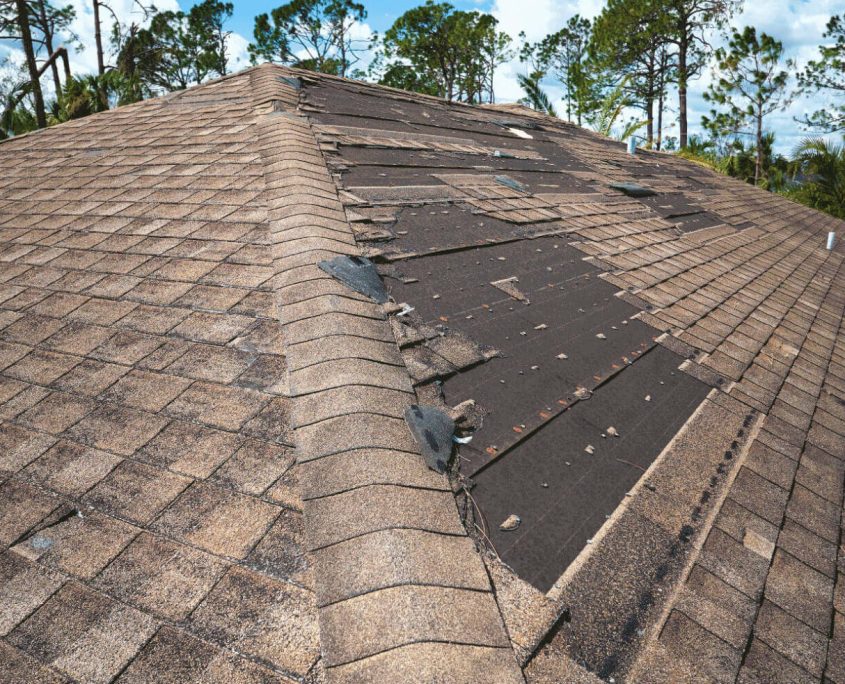
A roof with several missing shingles after wind damage

Wind & Storm Damage

Nothing stands between your roof and the Atlantic.

Inland roofs get weather. Shore roofs get weather with a running start — nor’easters that blow for two days straight, hurricane remnants riding up the coast, and the everyday onshore wind that never really stops. Wind doesn’t tear off whole roofs very often. It lifts individual shingle tabs, works the flashing loose a little at a time, and drives rain sideways under details built for rain that falls down.

What it looks like from the ground: a shingle tab in the flower bed after a blow. A piece of flashing ticking in the wind. A ceiling stain that shows up days after the storm, not during it.

The tune-up covers exactly this — up to five replacement shingle tabs, flashings re-secured and sealed, and photos of anything the wind got to that you can’t see from the yard.

The Slow Leak & the Ceiling Stain

By the time you see the stain, it’s been leaking for years.

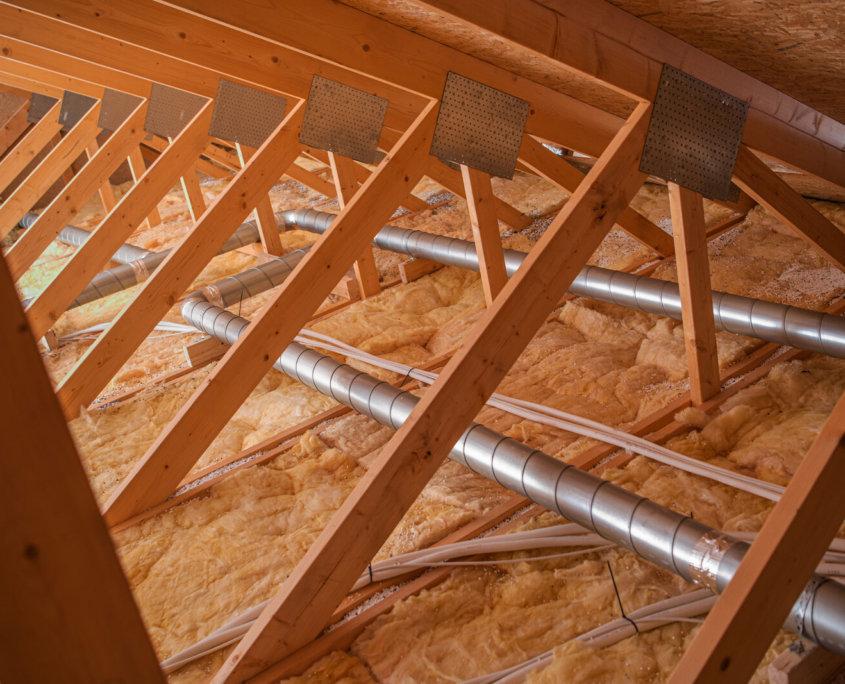
Here’s how roof leaks actually work: they don’t start the day you notice them. Water gets in slowly — past a dry-rotted pipe gasket, through failed caulk at a flashing — lands on ten inches of attic insulation, and disappears. Soaks in, dries out, soaks in again. For years.

On the shore, the clock runs faster. The rubber gaskets on your plumbing vents and the caulk holding your flashing details are exactly the materials salt air and coastal UV eat first. A gasket that lasts ten years inland doesn’t get ten years at the beach.

The good news is the same everywhere: the cause is usually small and cheap. A fifteen-dollar gasket. A tube of sealant. The tune-up finds it, fixes it, and photographs the before-and-after — so the mystery stain gets an answer, not a roof-replacement pitch.

Leaking roof flashing showing water staining
Attic ventilation under an asphalt shingle roof

Trapped Moisture, Condensation & Ventilation

The leak that isn’t a leak.

Not all water comes through the roof. On the shore, a lot of it comes from inside the house — warm, humid coastal air rising into the attic, hitting a cool roof deck, and condensing. Beach houses are especially prone: cathedral ceilings with no ventilation space, spray-foamed decks, complicated rooflines where intake venting never quite works. The moisture builds in the insulation, mold follows, and the plywood rots from the inside while the shingles up top still look fine.

We once walked away from a $125,000 roof on a new beachfront build in Delaware over exactly this. The design called for cedar shake on a nearly flat porch roof facing the open Atlantic, over spray foam — an assembly that was going to trap water and quietly rot the framing out from under it. We told the owner no. Some roofs fail because of bad work; that one would have failed because of bad physics, and no amount of craftsmanship fixes physics.

That’s the judgment the tune-up puts in your attic once a year: someone who knows what trapped moisture looks like at year two, when it’s an insulation fix — not year eight, when it’s structural.

And moisture doesn’t only work from the inside. Those black streaks running down shore roofs aren’t dirt — they’re algae, feeding on the shingles themselves, and humid coastal air is exactly where they thrive. Left alone, they hold moisture against the roof. Attacked with a pressure washer — the classic weekend fix — they take the shingles’ protective granules with them, and now a cosmetic problem is a real one. Growth on the coast isn’t a stain, it’s a signal. Read it right and it costs almost nothing.

Ice Dams & Winter at the Water

Yes, the beach gets ice dams.

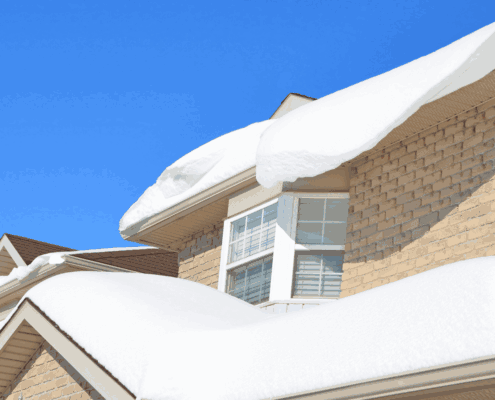
Shore winters live right at the freeze line — which is worse for a roof than a cold winter, because the melt-and-refreeze cycle is what builds ice dams. Snow melts over the heated part of your house, runs down, and refreezes over the unheated overhang at the eave. The dam backs icy water up under the shingles, where it finds every nail hole.

The defense is invisible: ice and water shield, a self-sealing membrane under the shingles at the eaves, valleys, and penetrations. In Maryland, the standard is running it to at least three feet inside the warm wall of the house — and on homes with deep soffits, that means two full rows. Corner-cutting crews skip it, and you can’t tell from the ground. The first sign is a winter leak in a roof that “looked fine.”

A tune-up before winter tells you whether your eaves and flashings are ready — and the photo report tells you what’s actually under there.

A roof under snow in winter
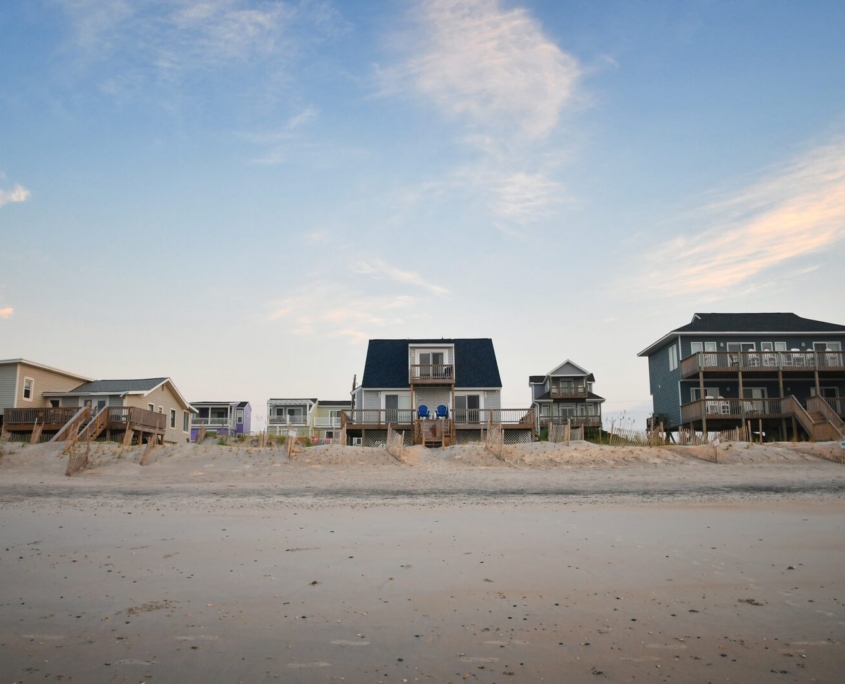
A shore home with an architectural shingle roof

Rentals, Second Homes & the Empty-House Problem

The most dangerous thing for a shore roof is nobody home.

A huge share of homes on the shore sit empty for months — second homes, seasonal rentals, investment condos. And the slow leak’s whole strategy is going unnoticed. In a primary home, somebody eventually spots the stain. In a house that’s empty from September to May, the leak gets an eight-month head start every single year — and a renter who does see a stain in July isn’t calling a roofer, they’re going to the beach.

And let’s be honest about primary homes too: even when you do live there, you’re never going to climb into your attic sniffing for must and pressing the insulation for damp. Nobody does. That’s not a character flaw — it’s exactly why the tune-up exists. A roof is the biggest investment on your property and the easiest one to ignore, because it asks nothing of you until the day it asks for everything.

If you own on the shore — whether you’re there every day or three weeks a year — the tune-up does the noticing for you: a full roof and attic inspection, the small stuff fixed on the spot, and 30–40 photos in your hands the same day — proof of condition you can check from anywhere. Selling? The same report is a pre-listing asset: a documented, maintained roof instead of a question mark on the inspection.

Gutters at the Beach

Sand, salt, and sideways rain: what the shore does to gutters.

Beach gutters fight a different war. Wind-blown sand builds up like sediment. Salt works on the fasteners and hangers until the gutter starts pulling away from the fascia. Storm debris arrives in bulk, not gradually. And in Berlin and the tree-lined neighborhoods off the island, you get the leaf load on top of all of it. Then a nor’easter delivers two inches of rain in an afternoon and the whole system gets its exam at once — overflowing at the seams, dumping water at the foundation, where flat, sandy shore lots don’t carry it away.

Gutter cleaning is the basic hygiene of homeownership — the teeth-cleaning of the house. Everybody knows it needs doing; almost nobody does it on schedule, because it’s the chore you can’t see from the couch. So we made it the done-for-you part of the checkup. Every tune-up includes the full gutter service: system blown out, gutters and downspouts re-tightened, slope checked for proper flow, and ground drainage eyeballed — because a gutter that overflows at the foundation is a basement problem wearing a roof costume.

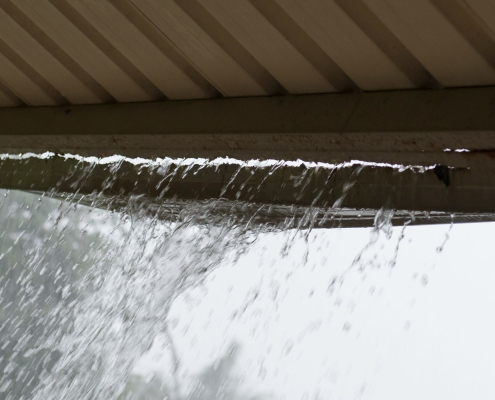
Residential gutter overflowing during a storm

The Shore Standard

We didn’t just show up at the beach.

AROCON has been maintaining roofs on the shore for years — tune-ups on the same Ocean City homes, season after season, for customers who’ve been with us since we first worked this market. 18 years. 2,400+ Google reviews across all locations. The tune-up starts at $199 for homes with two levels or fewer above ground and costs $324 for three-story homes. It is built for exactly the problems this coast creates.

Whatever your roof is doing — a stain, a shingle in the yard, gutters pouring over — it’s almost always one small thing. And here’s the honest math on the tune-up: yes, real work gets done. The gutters get cleaned, the loose tabs get fixed, the gasket gets replaced — work that needed doing anyway. But the real value is the trained eye that comes with it: the tech who spots the stupid little detail today that would’ve cost you $25,000 three years from now. The work is worth the price. The eye is worth the roof.

Catch it small. The homeowner must be present for the appointment.

Realtor, inspector, or property manager on the shore? → Partner Hub  ·  Not sure what your symptom means? → Diagnostic pillar